How to make an Iron saturated Red at cone 6 oxidation.
A good Iron saturated saturated kaki red glaze is one of the most difficult things to make, especially at cone 6 oxidation. In reduction using copper in an oxygen reduced atmosphere is usually enough for the copper to turn some variation of red. We do not have that luxury in oxidation. Over the past year I have done over 60 tests and firings trying to get the perfect iron saturated glaze. Making an oxidation Iron saturated red (especially if you are picky like me) is going to require more than a basic understanding of glazes or just reading a glaze recipe. We have to understand the UMF formula. for anyone who is starting from the bottom of glaze work let’s talk about what glaze is made of, then we can get into the amounts of what needs to be in the glaze to make a red in oxidation with iron. After that we will go over some trouble shooting for people who are close but having trouble.
One thing to keep in mind. I am using the glazy.org calculator. When I talk about molar amounts later in the blog I will be speaking from that perspective. Glazy is a little weird with iron and for the moment I was not using the extended UMF (yes there are two).
Glaze is composed of crushed up rocks floating in water, It’s a suspension. Usually these rocks are crushed into a fine powder that we buy from a company or store; We are spoiled in that way. These crushed up rocks (from this point I will call them minerals) supply one or more of three things that make a glaze. Keep in mind I am giving a very quick and basic understanding of what glaze is. It’s deeper then this. I don’t want any “ TeChnIcALlY BorOn iS a GlAsS fOrmeR” people.
Glass former: Silica (usually) melting point 3119 degrees Fahrenheit
Stabilizer: Alumina (usually Supplied by Clay / Kaolin) Melts at 3,762°F
Flux in the form of Alkali metal and Alkali earth (Supplied by things like Feldspars, talc, whiting, ect.) Flux helps lower the melting temperature of a glaze.
We need all of these things to make a glaze but we need to flux to “melt” or mature the glaze by way of heat. Notice how The first two things that create a glaze, The glass former and stabilizer, Don’t melt until crazy high temperatures . Not even cone 10 reaches 3,000F. This is where flux comes in. Fluxes are the ingredient that lower the melting temperature of the glass former and stabilizer, helping them mature / melt at the proper temperature. Now that we know this, let’s take a look at a normal glaze recipe. This recipe is posted on Glazy.org , a glaze library website which includes a glaze calculator .I highly suggest you get used to this site.

Normal glaze recipe. not red whatsoever.
Now here is the complicated part. Most minerals do not supply one thing. For example silica is a very basic one.

silica is simple, one thing.

spodumene as a material supplies a few things.
You’ll probably notice these minerals supply elements (yes the same ones on the periodic table) to the glaze. These elements are what truly make your glaze. We just generalize them by putting them in a category like “glass former, flux, or stabilizer”. If we looked at a full glaze recipe will all minerals present we can see what elements are supplied by what minerals.


This is where Kaki tomato cone 6 oxidation reds come in. You ever notice how there isn’t a large amount of iron red crystal glazes on the market? that’s because crystal glazes generally depend zinc along with low alumina, silica, and holds to let the zinc develop in the glaze as a crystal. But Zinc and iron don’t get along to well, unlike cobalt.
Here is a basic understanding of what I have figured out about Iron saturated glazes at cone 6 ox
1: It’s not a tin chrome red nor is it a crystal zinc glaze. It is just iron and the right amount of flux that makes it.
2: The amount of alumina and silica in the UMF should be between 0.18 - 2.00 (alumina) and 1.7 - 2.0 (silica) . The alumina and silica should be low enough to start the melting process of the iron but should not be so low it will slide off the pot. It is a kin to a crystal glaze in reality but not in context. Most people think crystal glazes are always huge blossoms, they are not. I think most iron sturated glazes are honestly crystal glazes ( or at least should be treated as such) This means a relatively low amount of silica and alumina compared to most glazes. This is important because your going to need a lot of iron, which will throw off your flux ratios to begin with.
Most glazes designed for cone a specific cone will will start melting a few cones before that. for example a glaze designed to melt at cone 6 will often have 0.2 - 0.3 alumina and 2.0 - 3.0 silica. Truth is this will start melting around cone 2 and finish the desired effect at cone 5 or 6.
3: You will need a balance of calcium and phosphorus. Luckily for us this is easily supplied by bone ash. Here is the thing though, the prime amount of phosphorus you need is 0.9 or 0.1 . My iron glazes usually hover around 0.09 . Keep in mine that phosphorus from he bone ash is necessary but it’s not 100% of the story. many people think “just add enough bone ash and it’s all good” no.
4: The magnesium, supplied in the form of talc, needs to be above 0.3 but will be balanced with calcium supplied by the bone ash.
5: The iron is the most important part. you need enough iron to be melted by the flux and turn into iron crystals or you need the Alkali metal to be just right. I truly means just right. 3 grams off or too much flux will burn out the iron making long red streaks. Iron will decompose around cone 4. Slow cools and holds do not work for crystal growth once the iron over fluxed. The amount of boron and metal flux neeeeeeeeeds to be tunes in for this to work.
6: The alumina and silica ratio (the amount of silica to alumina) is really up to you within the limits I gave here. That will decide if you get a matt or gloss glaze but keep in mind you need both alumina and silica to be low so the iron can melt.
7: Here is a general rule. If your glaze turns yellow, add iron . If it turns red but is too runny, add a little silica or reduce flux. I usually add silica. If Your glaze turns brown but is showing signs or little red crystals, turn up the alkali metal flux by 0.02 until you get the desired red. It takes some testing but with guidelines it’s easy.
8: This one is a big realization. At the end of the day Iron saturated kaki red in cone 6 ox are just low end iron crystal glazes. Were just not using zinc to make the crystals here. were using iron. If you are good at making crystal glazes and you treat this glaze as such without iron, you got it.
All of the limits listed here are easily read off of the UMF. They even color coat it for you.
9: Too much calcium will turn the glaze brown. Be careful to not go over 0.5 molar amounts.
10: The amount of boron int he glaze is the last step. the most difficult part is not the ingredients that make red, it’s balancing the alumina, silica, flux and lastly boron. Most cone 6 glazes need 0.16-0.2 molar amounts of boron in the UMF but this glaze does not…. because its a crystal glaze. In fact I have made a Kaki red glaze with 0.00 boron. It was weak but it worked.
Let’s put it the limits of the UMF in one good line up for people who can read the UMF.
The Stabilizers and glass former alumina and silica should be 0.18 - 0.20 (alumina) and 1.7 - 2.0 (silica). Having the boron up past the 0.1 mark helps but is not needed. You need 0.35 - 0.45 calcium and 0.07\6 - 0.9 phosphorus. You can usually get this in the form of bone ash. You need between 0.3 - 0.37 Magnesium. You need about 0.15 Iron. In conclusion you will need: phosphorus from bone ash, magnesium from talc, iron from iron oxide, and you will have calcium from the bone ash that comes with the phosphorus. other than the leveling of the silica, alumina , boron, and flux levels (which again, is the hard part) thats the basics of a kaki red in cone 6 ox. The most helpful thing I can tell you is that it’s not a normal glaze. The usual boron amounts in the UMF for a regular cone 6 glaze do not apply here; treat it like a crystal glaze (if you have developed your own you will know)
A warning here. Boron counts as a glass former and is sometimes seen as a flux. The iron crystals people are looking for that make a good iron glaze depend on how well they melt. To much boron or metal flux can over melt the glaze making the iron streak. The hardest part about this glaze is balancing the Alkali metal flux with the boron (if you choose to use Boron that is). This is why I have the trouble shooting section.
Trouble shooting
A lot of the time a glaze will turn brown. If it turns brown you either need more Metal flux, boron or less silica and alumina (make small jumps not big) This will take some testing but it’s easy with a line blend. Lets look at some obvious examples of failures and why they failed.

This one has very small iron crystals but turned brown. it was very stable. It needs more flux, boron, or less silica and alumina.

This one has great crystals but started to turn yellow. added more iron.
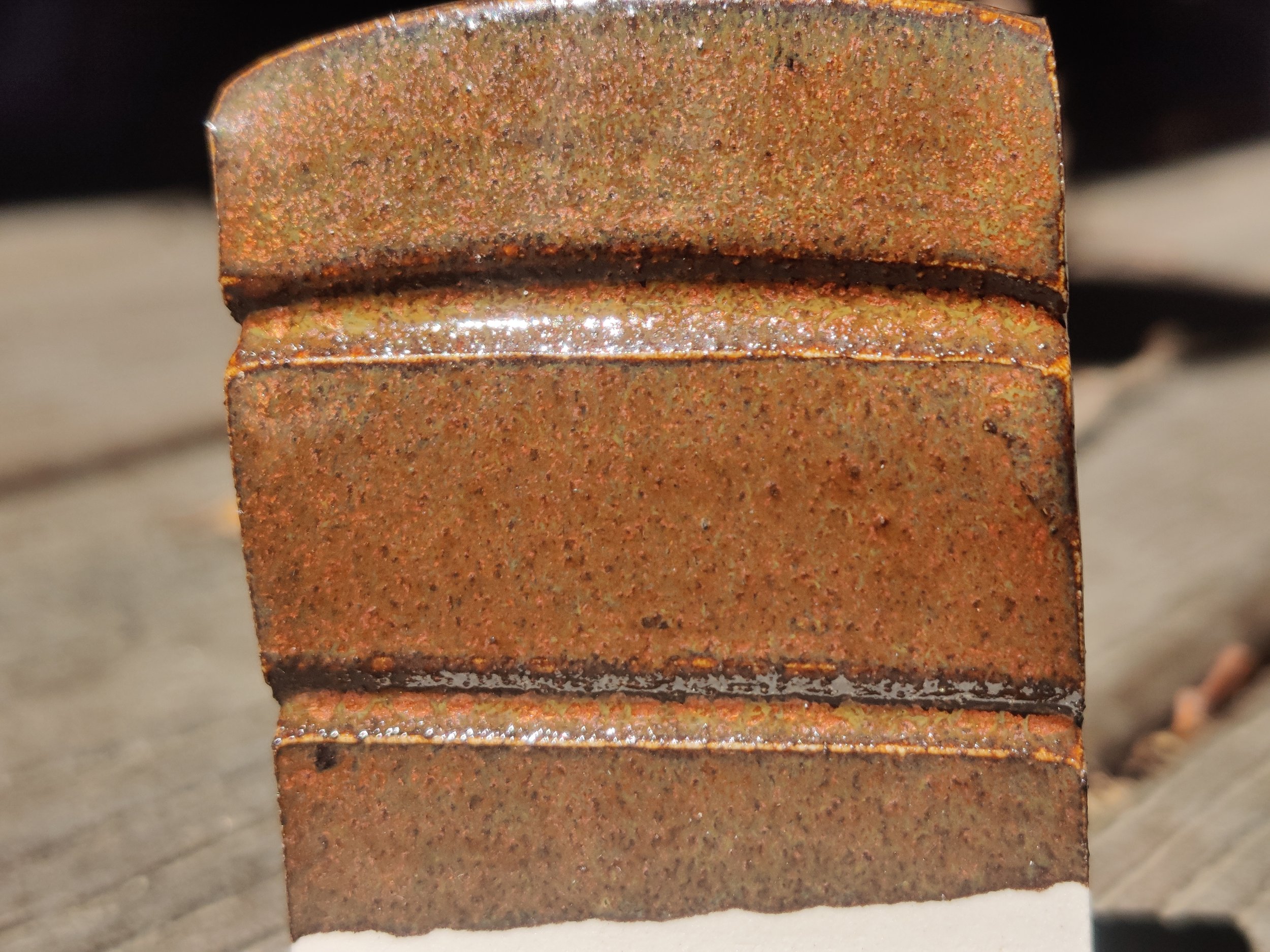
This was good but I can see brown. It’s no longer red. I hightened the metal flux.


Raising the flux worked. but the edges are turning brown. Had to turn in the specific gravity here.

Damn near perfect but still melting a little too much.

This was a layering test, the left was one coat while the right was 3 coats. Huge difference.
The key is to either introduce more metal flux to the glaze to melt more or reduce the alumina and silica to such low levels that it makes it easier for the flux to do it’s job. Lowering the workload as it were. If you are using Boron (the orange numbers) you have to take this into account as if it were a flux as well. The effects of adding boron and lowering the silica and alumina will stack.
The easy part are staying within the limits I gave you earlier in the Blog. The hard part is testing the perfect balance of Alumina, silica, Boron, and Alkali metal so you get the correct amount of melt without burning out of under firing the iron in the glaze. I do not mention the alkaline earths because those are locked in by the bone ash and talc levels I gave earlier. After the initial Magnesium, iron, calcium, phosphorus limits I lay out earlier, THIS is the difficult part.

And that's how you make and cone 6 iron saturated red. One strange thing about these kind of glazes. The traditional way people make a cone 6 glaze is by dumping an amount of Boron in the glaze. This is what often turns a cone 10 glaze to cone 6. It’s truly just boron being around the 0.16 - 0.18 amounts in the UMF. Because of this many glazes have frit 3134 or gerstly borate in them. However Kaki red glazes often have little to no boron in them. While boron helps the melt of this family of glazes you might find recipes that have 0 boron. I have about two myself that are not Bristol glazes and have no boron in them and they still turn a great red. Even though your classes have told you otherwise don’t be afraid. just try it. half the time it still turns a very good red.
The biggest advice I can give is because the Alkaline earth ingredients are locked in by the ingredients necessary to make a good red at cone 6 ox in the first place, the majority of your job is turning in the silica, alumina, and boron levels as the AE will coincide with the alkali metal fluxes anyway.