At my new job we deals a lot in stains. I usually do not use stains; Mainly because I am stuck between them not having enough movement for me and not understanding what they are made out of. I know that they are some type of fired combination of materials fired at high temperatures but I do not have a breakdown of what each stain is really made of. Most people I know just stick them in a base by weight to see what they can do in a base… So that’s what were going to do. I put mason stain 6097 deep red in one of my phase separation bases at 15%, here are my results.

Note: Food safty
This is an encapsulated stain. Encapsulation (or inclusion) means the cadmium pigment is coated with a zirconium silica shell, which prevents the cadmium from interacting with the glaze.
How? I don’t know. The process? I don’t know. Does this make it food safe? I Don’t KNOW!
I do know the FDA cares about lead and Cadmium in glazes. Some of these stains do have Cadmium in them but are still supposedly food safe. I want to be clear here. I am not saying these types of stains are or are not food safe. These tests are just me playing with it in a base.
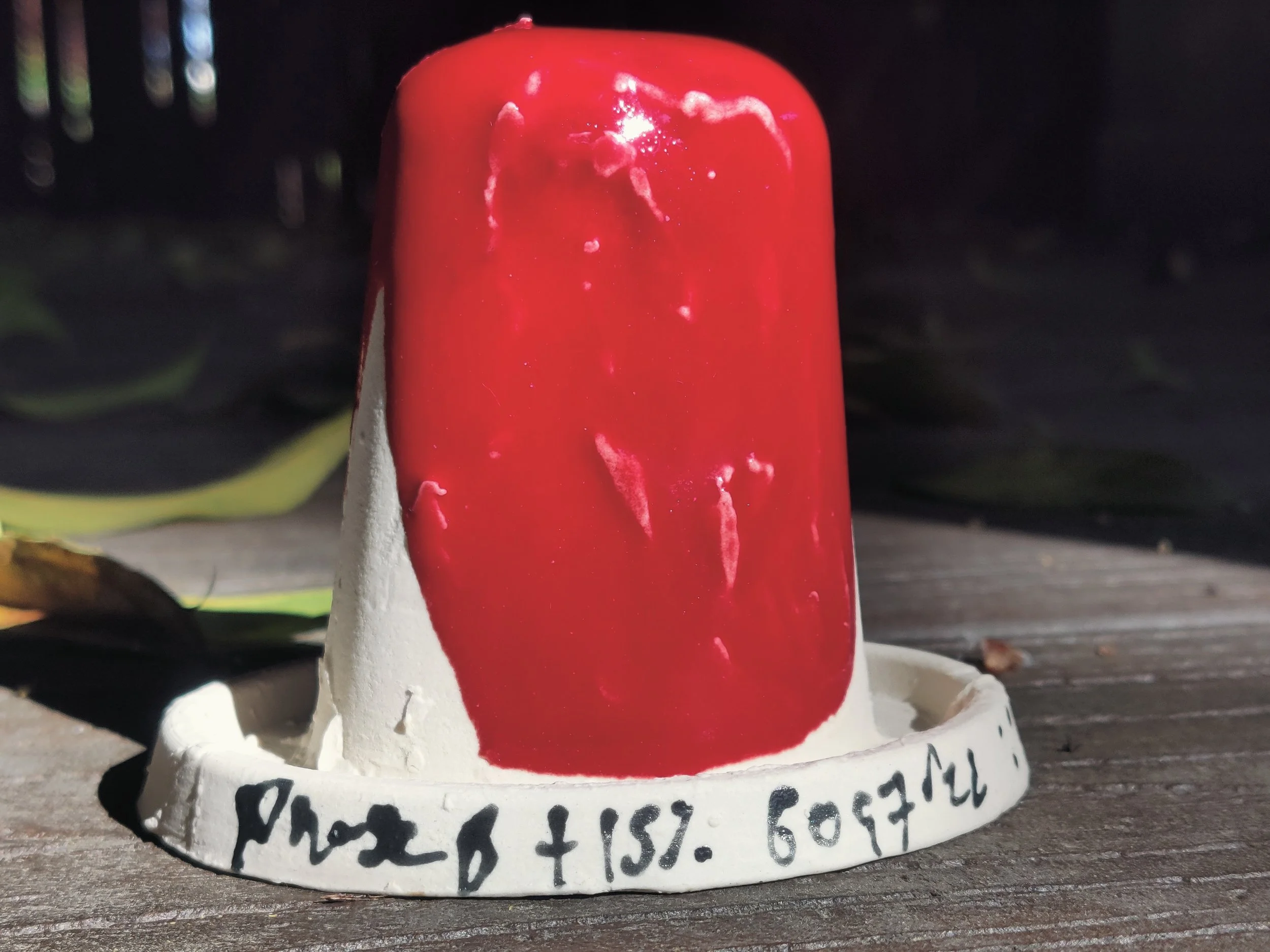
Phase B + 15% red 6097
Clay: B-mix slip cast
SG 1.5
application: 3 second dip
cone: 6 ox with 30 min hold at 1800f
Note: I put it in a phase separation base hoping i would get color other then red but I think I put too much stain. If you look closely you can see tiny little bubbles forming in the glaze. I do not know if this is because I put too much stain in or something else.
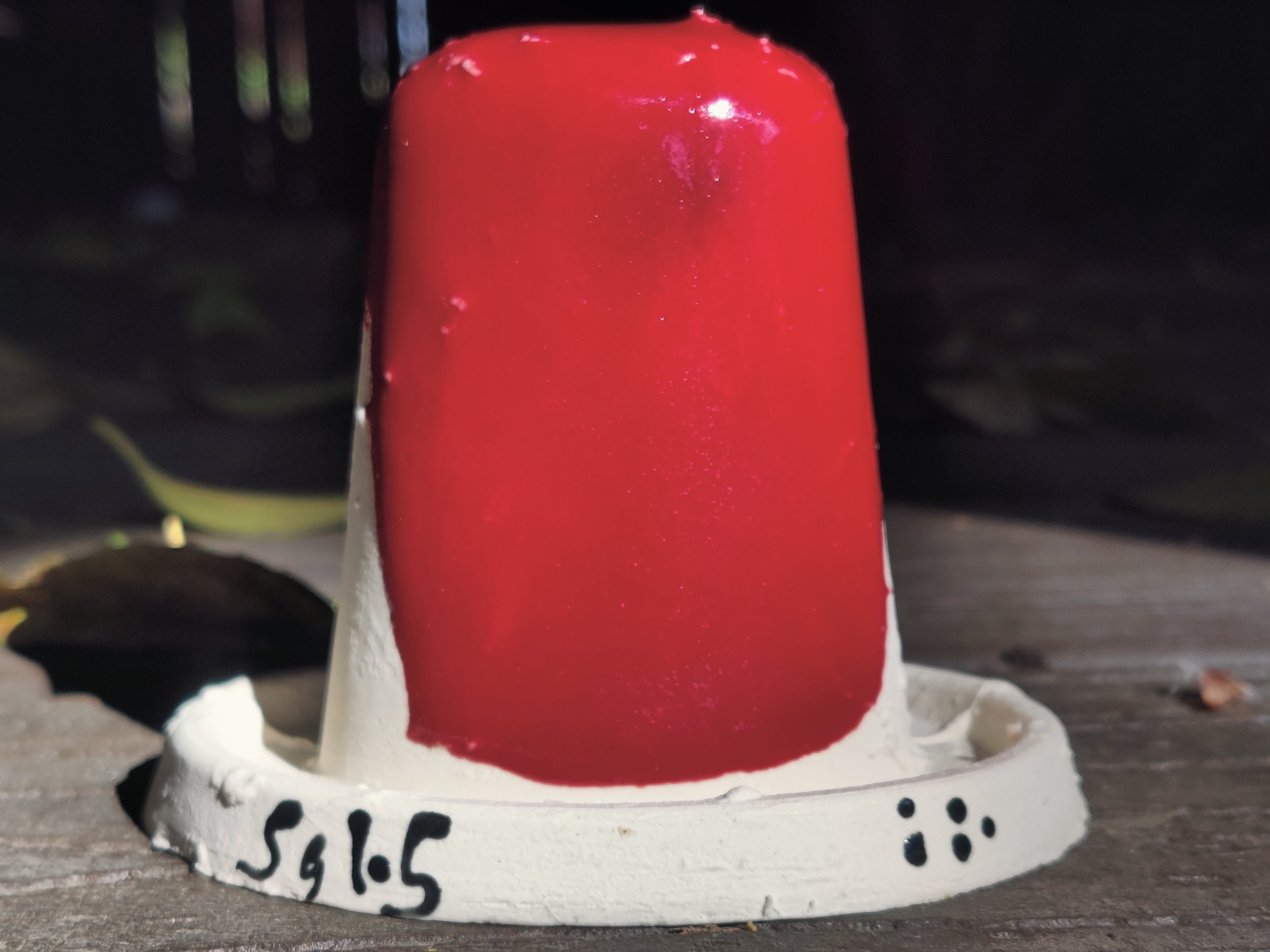
Another picture of the same glaze but with a 5 second dip. Everything else the same.
There are a few things with Mason stain glazes you have to watch out for according to Mason. Firstly you should have a calcium based glaze. For those of us who make glazes we know that the fluxes are separated between alkali metals and alkaline earths. As CMW has noted a lot of the alkaline earths changed the color of the glaze not only by themselves but when they react with other things. On top of that it is suggested that you have a zinc-free basic glaze as zinc reacts with many of the things these Mason stains are made out of and either end up messing up the color or bubble. Luckily for me my phase base is calcium based and does not have zinc in it. I was secretly hoping that the phase separation would happen in this glaze from the titanium dioxide and end up making an interesting whitish red or bluish red color. But the stain is too strong especially at 15%.