New green glaze in development (Gargomon green)
Were are officially hopping off of iron. I have a few more tests to do with my molly crystal glazes but nothing so important we can’t move on. The two colors I would really like to get in to are green and pink. Fortunately for us, we have chrome. I know, I know, I hear you saying “ what about copper” but listen. We will play with copper for a little bit just to see what it has going for it. In my experience it takes more copper then I want to use to get the depth of green I'd like in a cone 6 glaze but *shrug* we have to test for it just in case we find something we like… also…. I may be a copper hater. With that in mind were going to go by the normal playbook of taking some of my bases and doing a line test. Lets start with my phase base and a little copper.
Note: I asked my patrons what we should code name this glaze and of course all of them said the name of a digimon I forgot about, Palmon. So Palmon will be the name of the glaze. If it ever gets picked up by a company we will change it is Viridian (like Viridian city) as that was another name they chose.

This is Palmon. So this is the color were going or but a little bit deeper green.
First lets take one of my phase separation bases and put a little copper in.
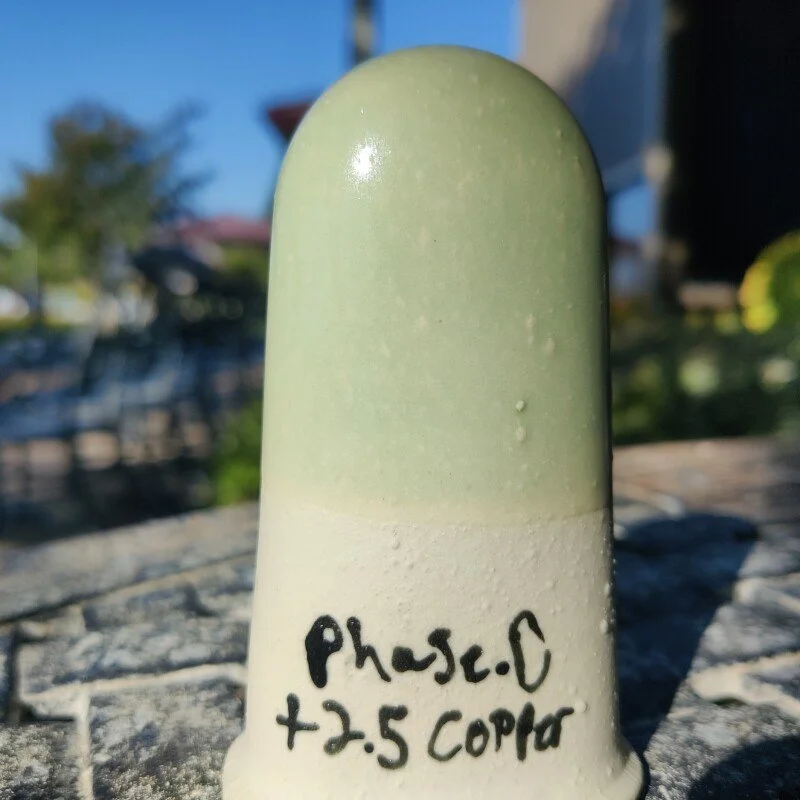
Phase base + 2.5 copper carbonate
Clay : b-mix tile
SG: 1.45
Application: 4 second dip
Cone 6 ox
No viscosity tuning
My guess…. My hope, was that 2.5% copper by weight would make a darker green. Unfortunately, as I said in the intro, it takes more copper for a darker green than this.
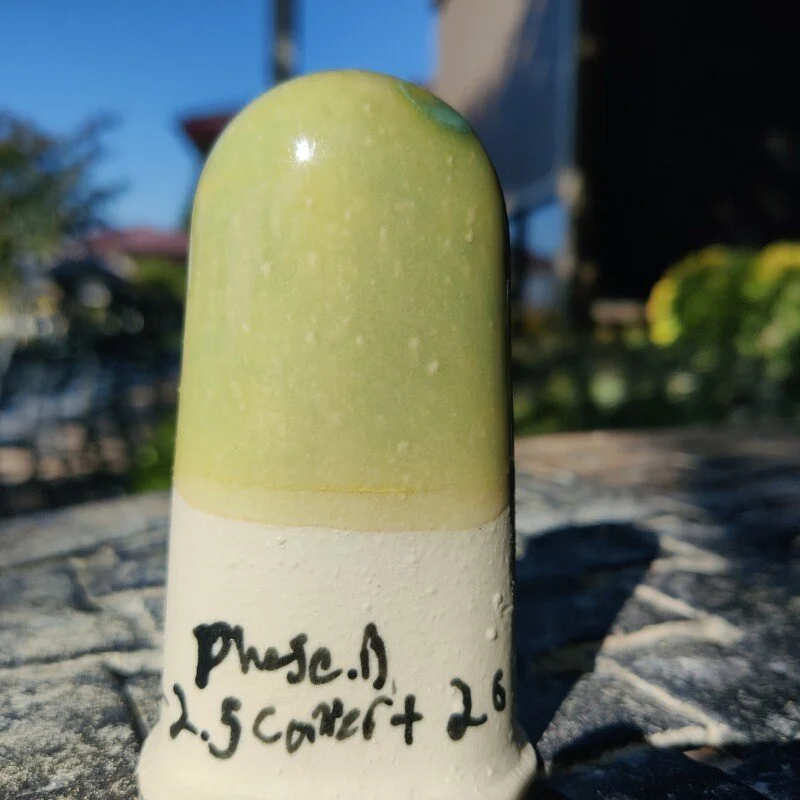
Phase base + 2.5 copper carb + 2.6 TIDI
Clay : b-mix tile
SG: 1.45
Application: 4 second dip
Cone 6 ox
+ 2.6 TIDI
No viscosity tuning
You see that little green drop up there? That to me is a major sign that it needs higher SG.
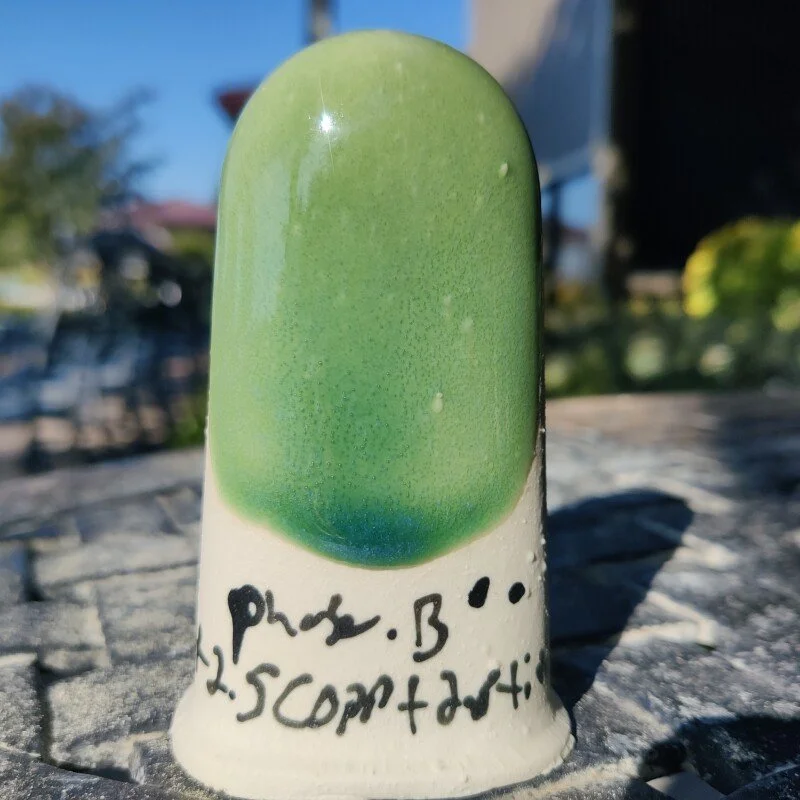
Phase base + 2.5 copper carb + 5 drops of epsom salt solution
Clay : b-mix tile
SG: 1.45
Application: 2 second dip
Cone 6 ox
+ 2.6 TIDI
Viscosity tuning: 5 drops of Epsom salt solution
I noticed on the other tile the glaze needed a higher SG, well I did not want to wait, so I did the next best thing. I added 5 drops of Epsom salt solution to see what happens when we increase the viscosity. Look at that green. It’s the same recipe, just….. thicker.
I’m also starting to see some phase separation as well. This is what the base of the glaze is designed to do. This tells me the next copper test has to be tuned for thickness .
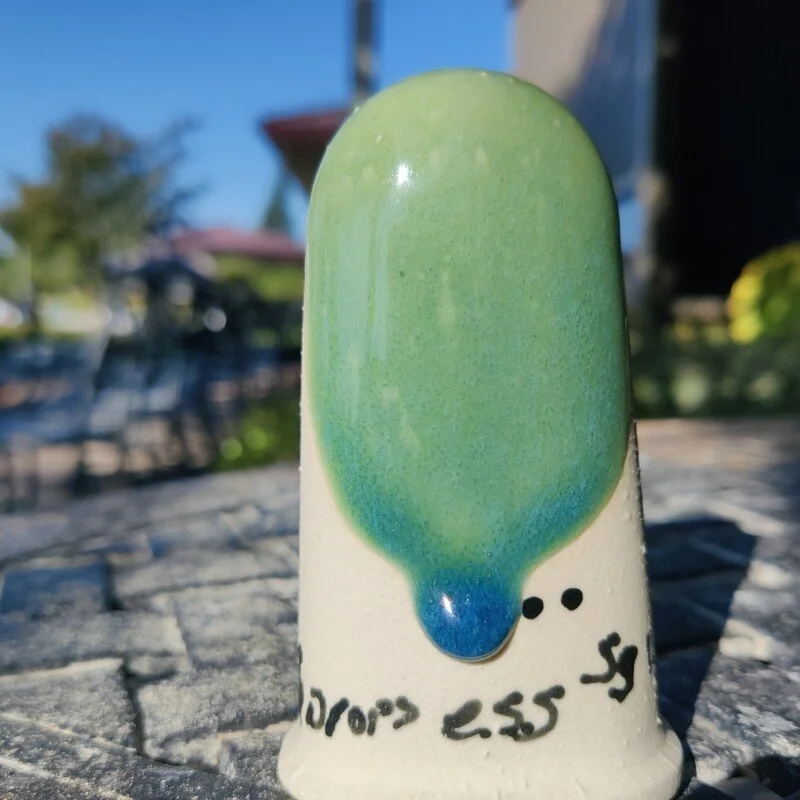
Phase base + 2.5 copper carb + 2.6 TIDi + 8 drops of epsom salt solution.
Clay : b-mix tile
SG: 1.45
Application: 4 second dip
Cone 6 ox
+ 2.6 TIDI
Viscosity tuning: 5 drops of Epsom salt solution
We had to take it to the extreme . I do not mess with viscosity tuning much. Usually viscosity tuning is the last step on my list when making a glaze; it’s more of an ass needed thing. I wanted to see what happens when I put more than I should. The Ceramics Materials Workshop talks talks about the correlation between thickness and a “hotter firing” a lot. The concept is essentially the thicker the application the hotter the firing (for the piece). So far from all of my testing with making the viscosity and SG of my glazes thicker they are right.
After this I stopped playing with copper. I was never going to make a copper one in the first place. I just don’t want to leave the copper people with nothing ;) After we dumped copper it was easy street. the first test was with 1.5g of chrome in the same phase sep base I had been testing on earlier… and well…
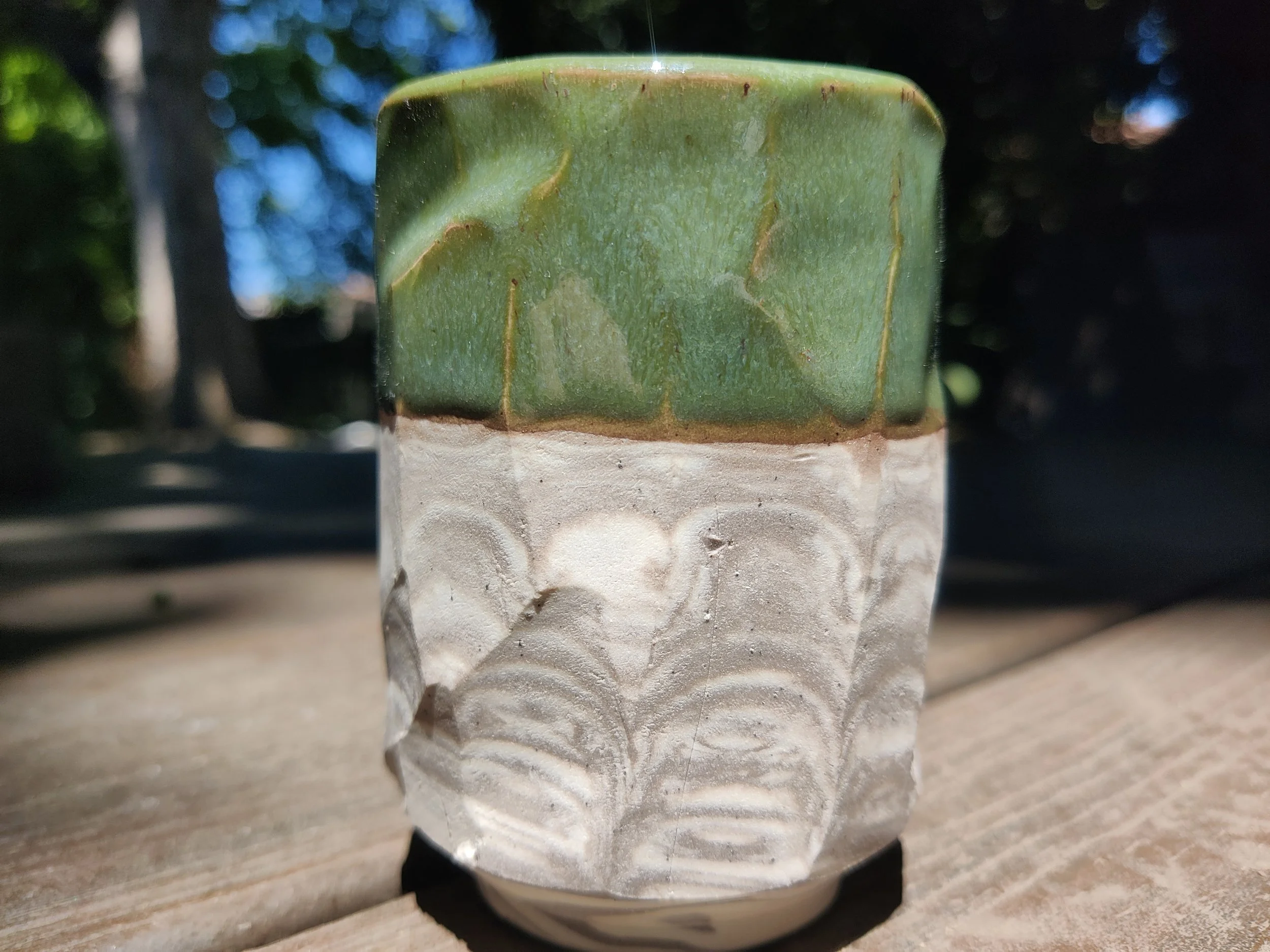
It slapped out of the gate .

Gargomon green
(phase separation glaze + 1.5 chrome green ox…. that’s it.)
Sg : 1.4
Application: 4 second dip
cone: 6 ox
clay: mixed.

Gargomon green
Sg : 1.4
Application: 4 second dip
cone: 6 ox
clay: mixed.

Gargomon green
Sg : 1.5
Application: 4 second dip
cone: 6 ox
clay: mixed.
This is why I love chrome greens over copper for a straight green. You can see some blueish white phase separation when the glaze is thick. I even found an awesome interaction with chrome that makes blue if you add a tiny bit of chrome and iron. I do not know if chrome + iron is a blue combo or is it needs to be in a phase separation base but it makes a great blue without using cobalt. One huge note before we end this blog. I have been working on this glaze for a while. Maybe 2 months.
Clayscapes has shown interest in this glaze and they do have the recipe right now. because of that I am going to lay down some working proprieties at the end of this blog for anyone who follows me and has access to it from them either now or int he future.
I decided Palmon is my least favorite digimon so I renamed it Gargomon green. Here is a picture for reference. Get fast switched on, nerd.

This suits the color to the glaze much more.
Notes on the Gargomon green aka Viridian green .
It likes to be at 1.5 Sg and fired to cone 6. It will work between cone 5-7
Although it has a good cone range it will get bluer as you fire hotter or apply it thicker. at cone 5 its kind of a brownish green but anything past cone 6 you will see the phase sep.
It will work on both red and white clay bodies. of course you have to take absorption into account but it gives a good green on the high majority of clay bodies I used it on.
You can technically see thorough it if you put it on texture. You can see this on some of the pictures especially near the edges.