Controlling crystal glazes part 2 (Ancient copper was a crystal glaze the whole time)
I have been hard at work reforming my red lotus glaze. I wanted it to be more user friendly, have a wider cone range, and have crystals grow easier. Iron crystal glazes are hard to not only develop but even harder to control. A common misconception with these glazes is that you are trying to make a tomato red glaze; which is hard by itself. but there is a major difference between making the color red at cone 5/6 oxidation and making a iron crystal red. Here is an example.

One of my tomato red glazes
This is a good iron saturated Kaki tomato red glaze but the iron is streaking. Enough of these together will give you a great red. The chemistry is very much the same as an iron crystal glaze but sliiiightly different. Now let’s look at good ol’ Ancient copper; A true iron crystal glaze.
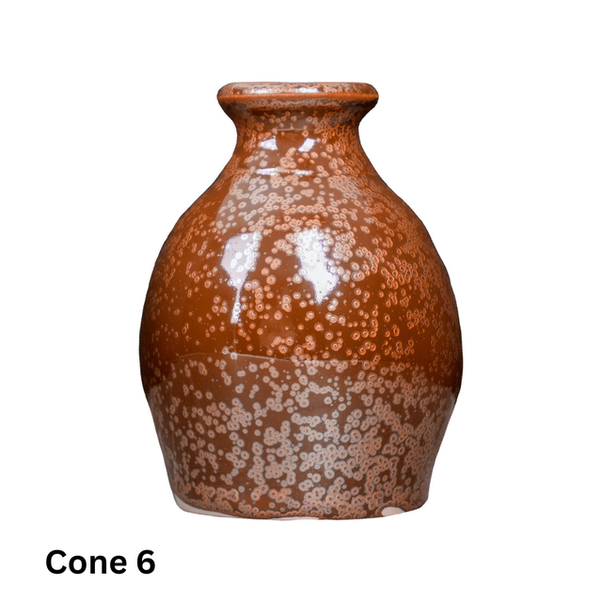
See that? see how the iron crystals do not streak? They are circular. Starbursts instead of streaks. This is a common misconception with these iron saturated glazes. Mainly because they are so close in the UMF and honestly because the finer details get lost in the excitement of people trying for years to make a red only to succeed and say “I did it!, I made ancient copper!” when really you made a good red with streaks and now stable crystals lie the original. I find many recipes online of people claiming to have made a replica only to have no crystal nucleation or a streaky result. But here is the secret. Something that helped me make my version I call red lotus. Iron saturated tomato reds are… crystal glazes. Or at least you must think of them that way in order to succeed. It also mimics the behavior of crystal glazes, just like the last blog I wrote about heat killing off and spreading out crystals of over fired. Here, Let’s take a look at my version A.C AKA red lotus.
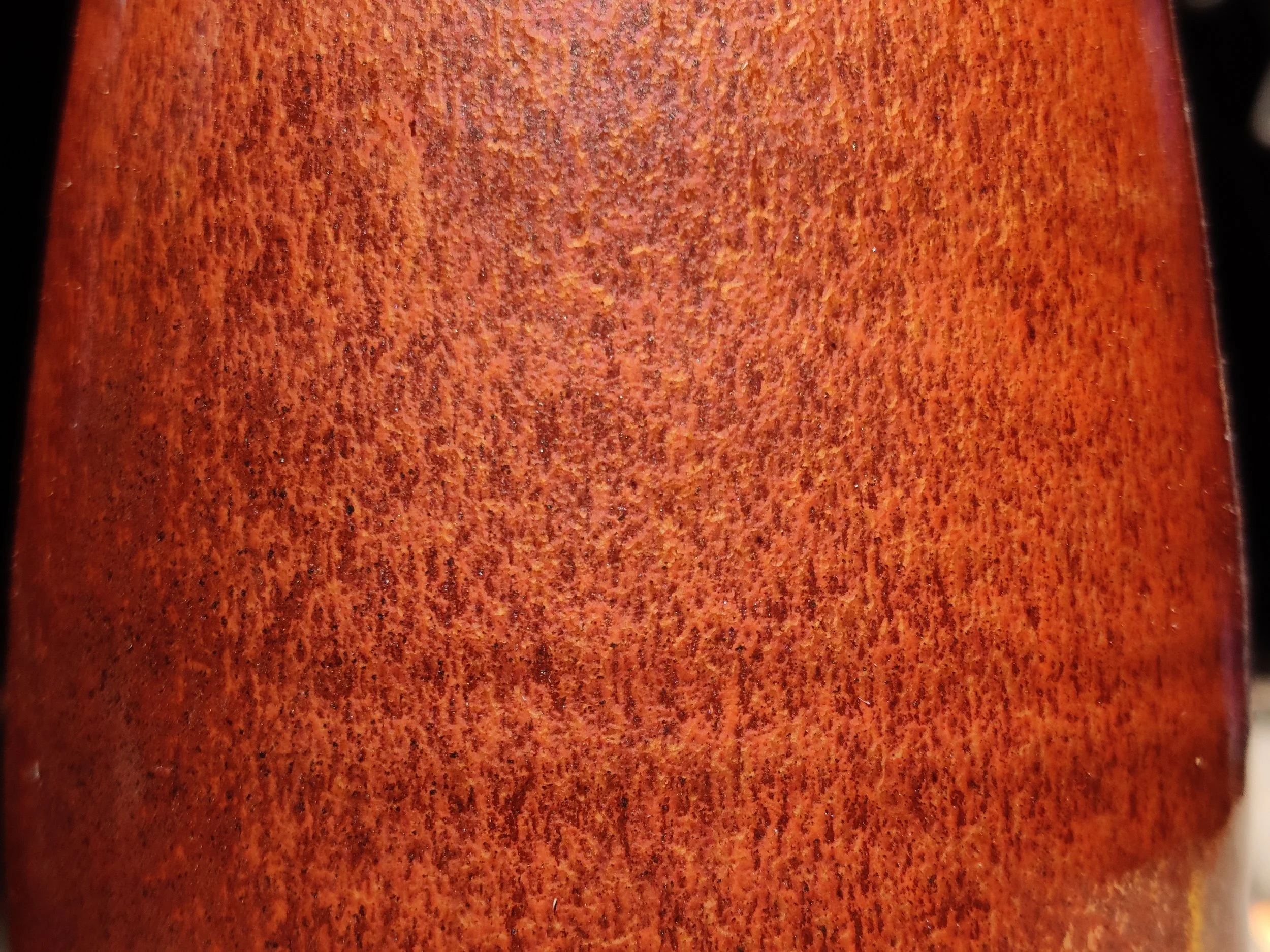
Red lotus v.2
Sg 1.3
application: 4 second dip
cone 5.5 ox
clay": Laguna porcelain 16
See this? Remember in the last blog that lots of people will confuse over nucleated crystal glazes for a matt glaze if it is just a little under fired? that’s what is going on here. Notice it’s fired to cone 5.5. not 6 or 7.
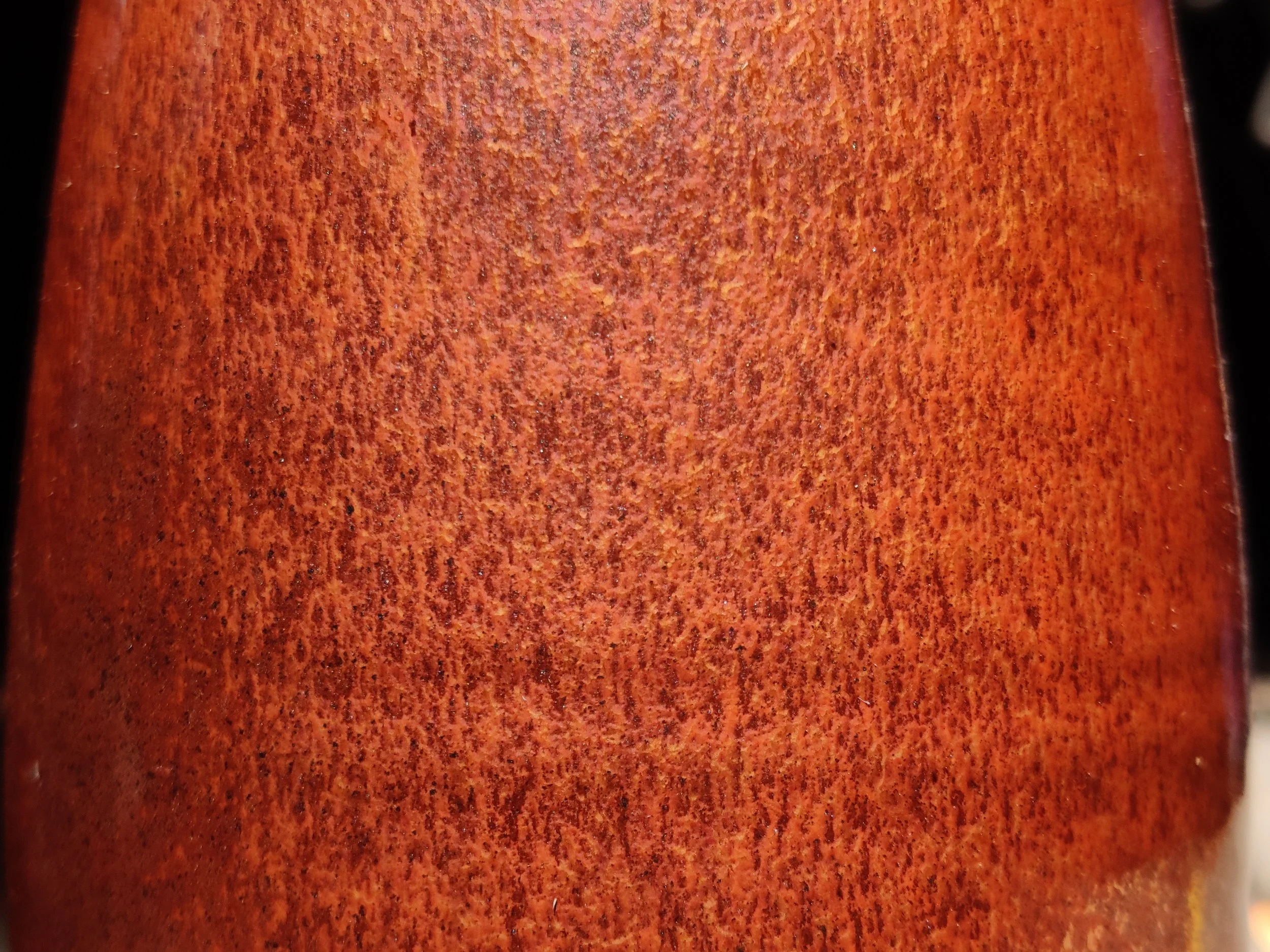
A closer look
Now lets look at the same glaze at cone 6. Same formula, same application.
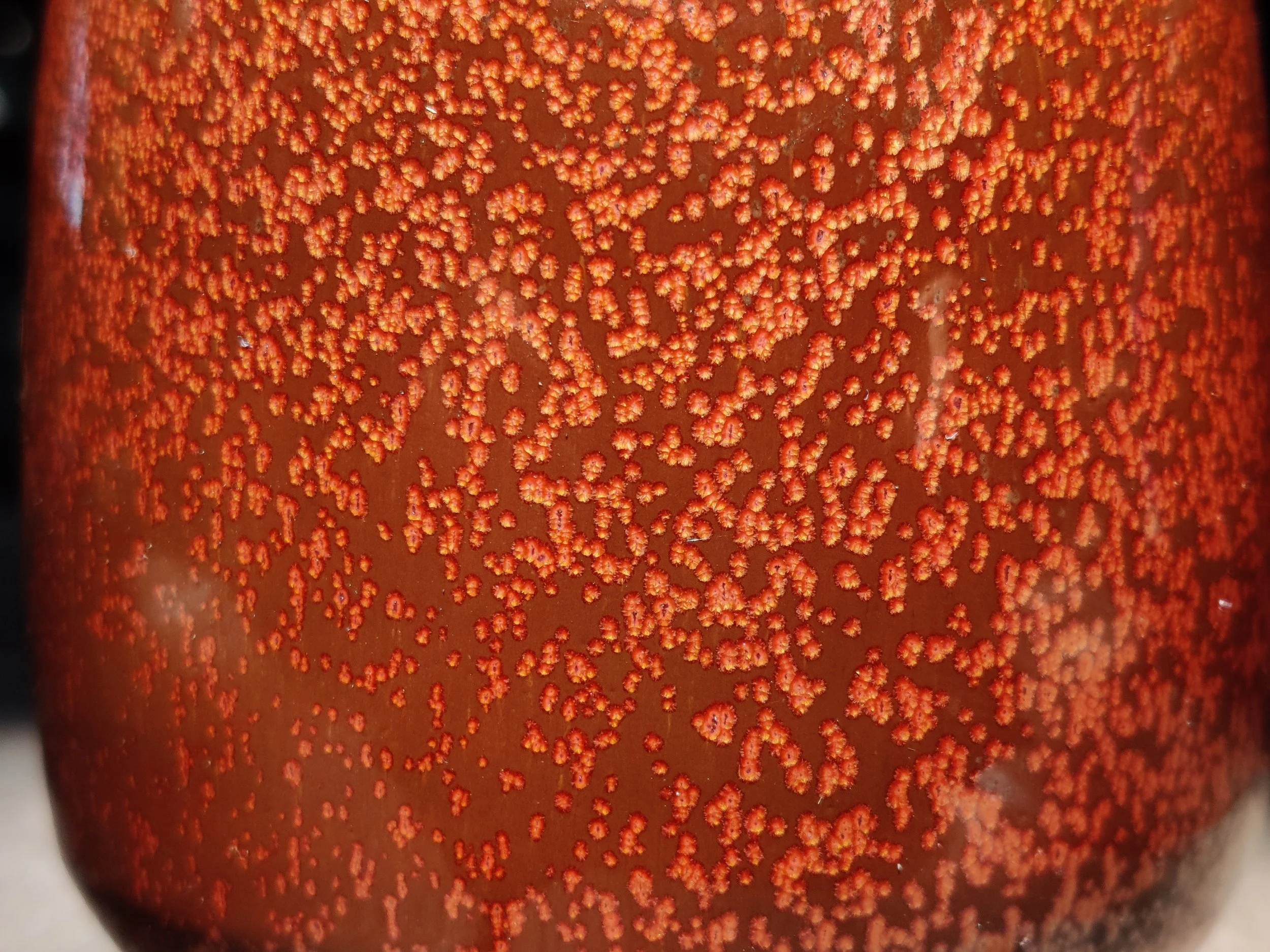
Red lotus v.2
Sg 1.3
application: 4 second dip
cone 6 ox
clay": Laguna porcelain 16
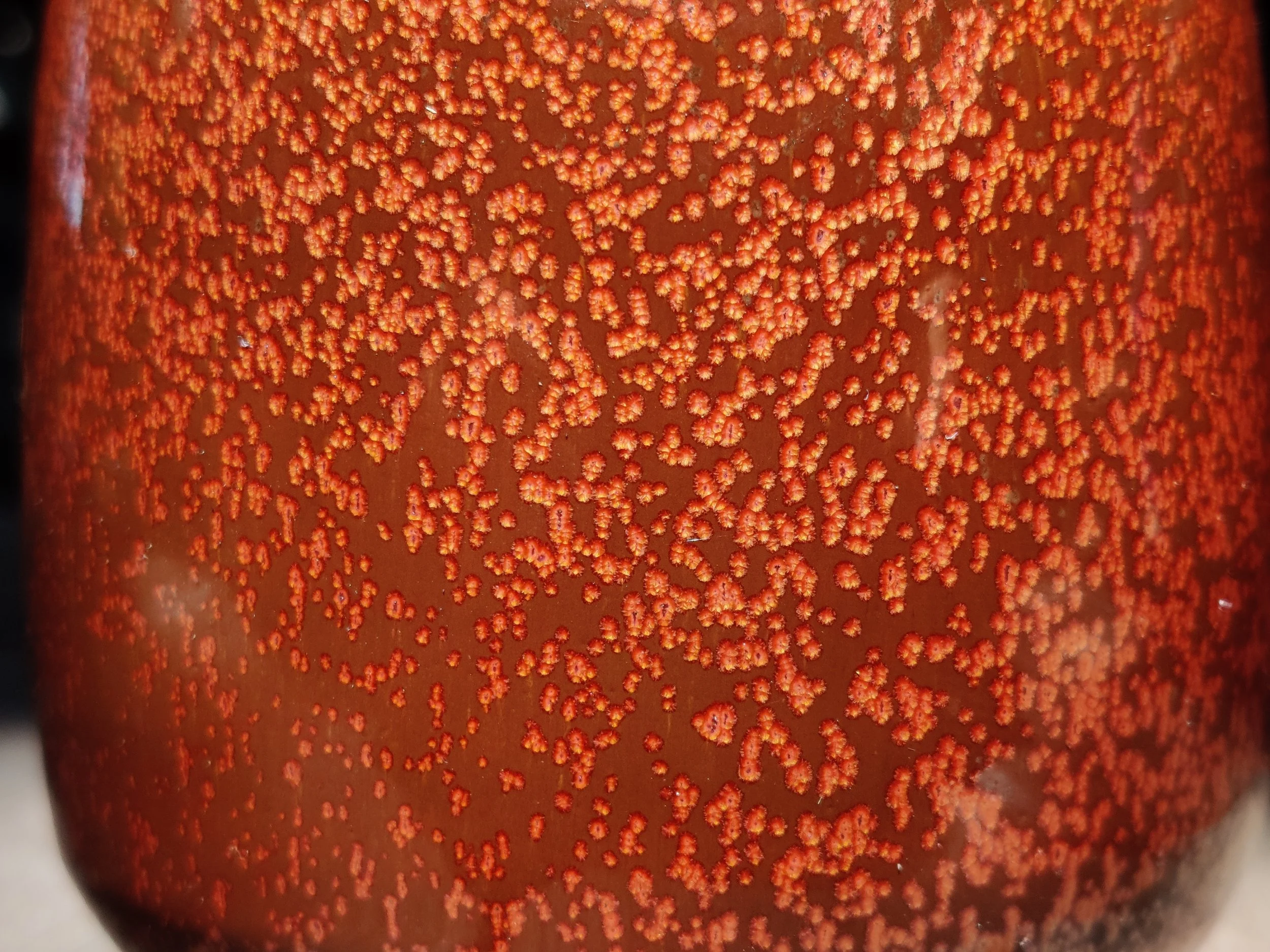
A closer look
See the crystals spreading out at the heat gets higher? Same glaze, same application, same clay body, didn’t change a thing except the temp. Now lets look at a cone 7 version of it.
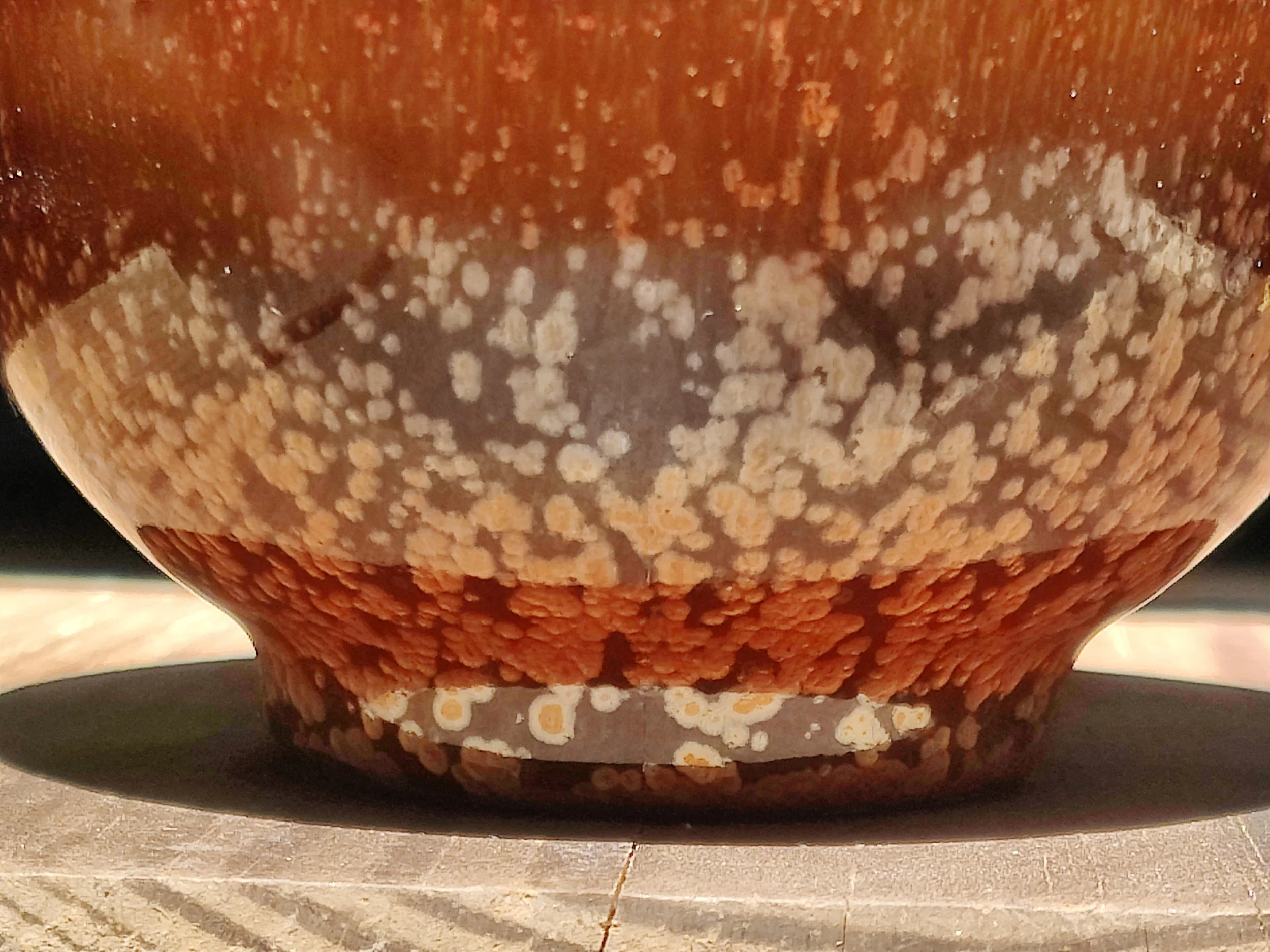
Red lotus v.2
Sg 1.3
application: 4 second dip
cone 6.5
clay": Laguna porcelain 16
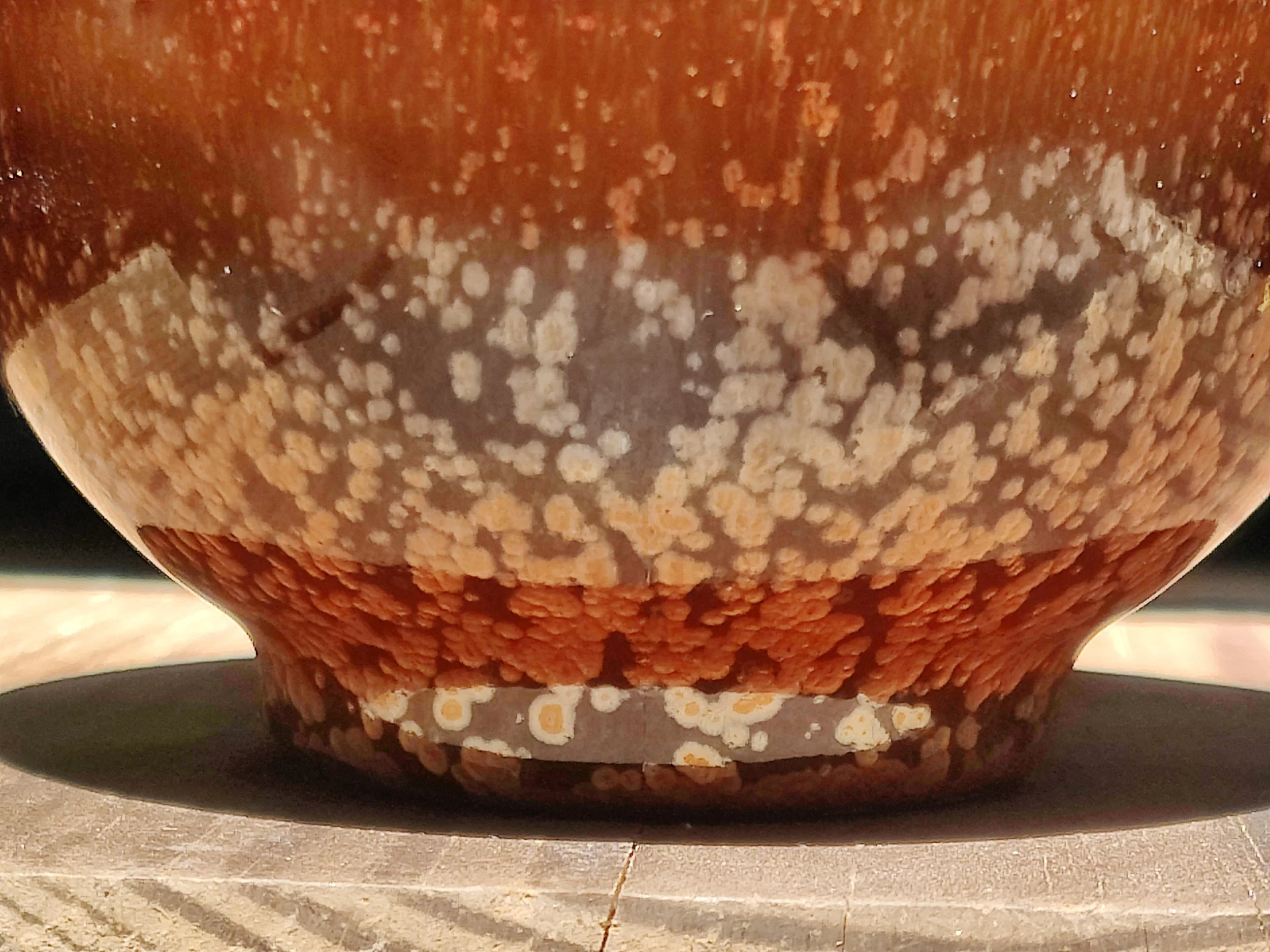
A closer look at the cone 6.5 version.
You can see the crystals spreading out more as the heat goes up little by little. That’s because ancient copper was an iron crystal glaze the entire time. Even Digitalfire has a version that is close but the iron still streaks while the crystals are not spread out enough at cone 6 https://digitalfire.com/picture/3343 . On top of all this, it is very easy to over fire the iron (which is why it’s so damn hard) which I believe is the very thing that causes the iron to go from the starbursts to the streaks. Because say it with me . Ancient copper was a crystal glaze the whole time. Those trying to develop it often get the streaks and call it a day. Getting a stable red is difficult enough in cone 6 ox but to make it crystalize and stable is the goal. So we must treat it like the crystal glaze it truly is which means even the stable version will look “matt” if under fired; Just as we talked about in the previous blog.
Now that you can see the difference you can probably search the web and see people using ancient copper (both old and new versions) and see the reason they did not get crystals. Lastly I tested Digital fires version just to see. Here is my result.
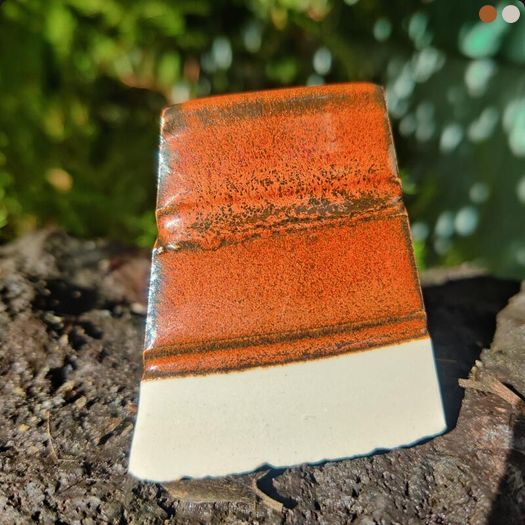
Here is Tony Hansens (creator of digital fire) version. This is a tile I made so I feel ok sharing it and the recipe is public. link here: https://digitalfire.com/picture/3343