Controlling crystals - application and heat is key (crystal glazes)
The ceramic community seems to be fraught with misinformation, replication, and un-needed ingredients. Since I have started making my own crystal glaze I have tested and proven a couple of things taught to me by CMW. See my previous blog for a more in depth explanation https://www.earthnationceramics.com/blog/my-own-crystal-glaze . TLDR; you do not need lithium carbonate, titanium dioxide, rutile, or high flux ratios to make crystal glazes. These ingredients have a habit of showing up in crystal glazes for ease of use reasons, sure, But they are not necessary like many people who have been given recipes or books will have you believe. The pictures I am about to show you has 0% of those things in them. More over and what this blog is mostly about, is you can control crystal glazes nucleation and appearance based on how you apply the glaze. Application really is the other side of the coin when it comes to heat work and heat work very much effects how your crystal glazes look and how many you get. Let me show you.
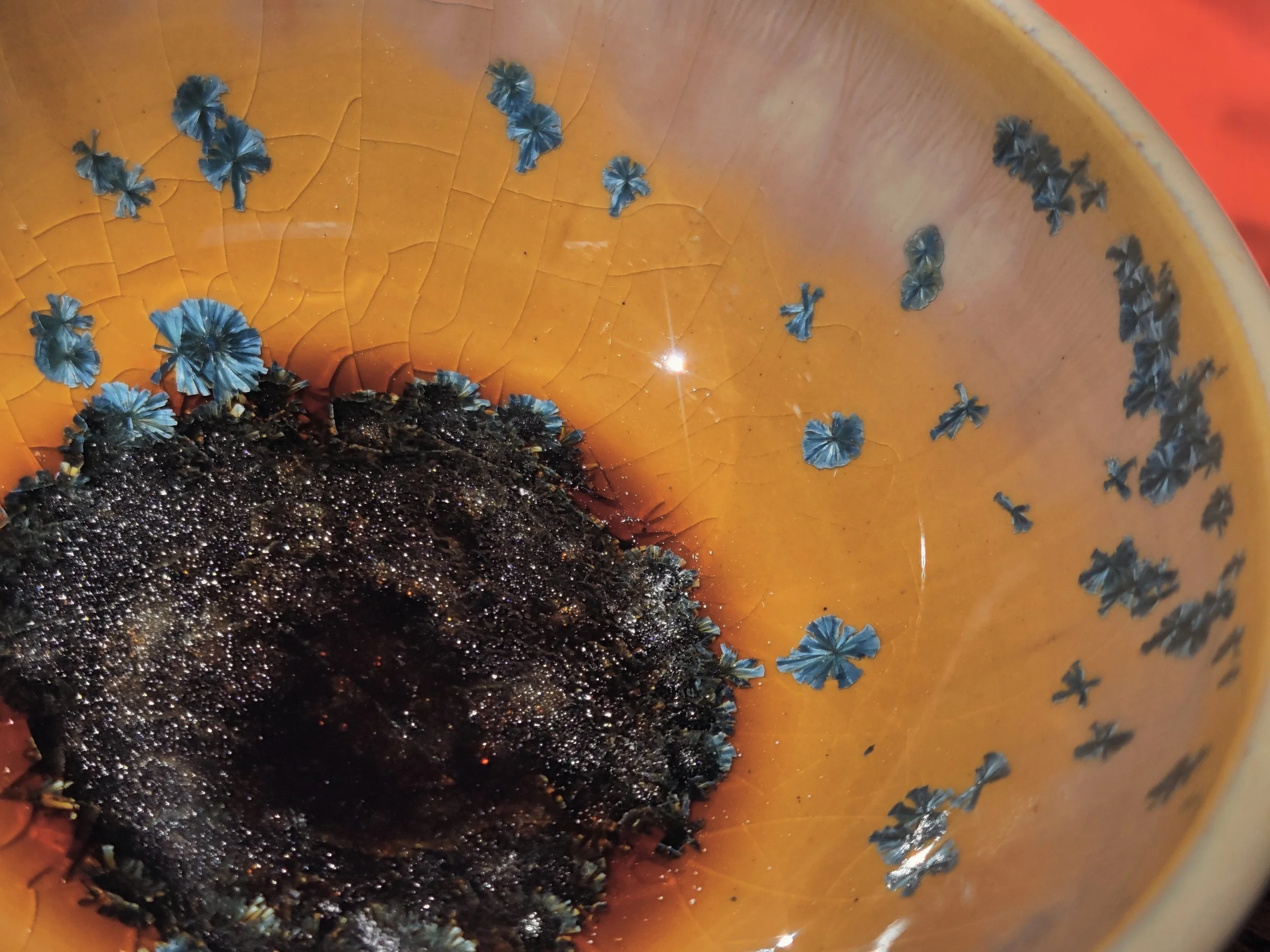
Prototype glaze. (I got rid of the crazing in the non prototype version)
This is a prototype version of my crystal glaze. The crystals are spread out perfectly. Once I made a version that doesn't craze on my porcelain I decided to test application. A 2 second dip, a 4 second dip, ect. All on the same clay body and in the same kiln load in the same place. Lets see how they differ.
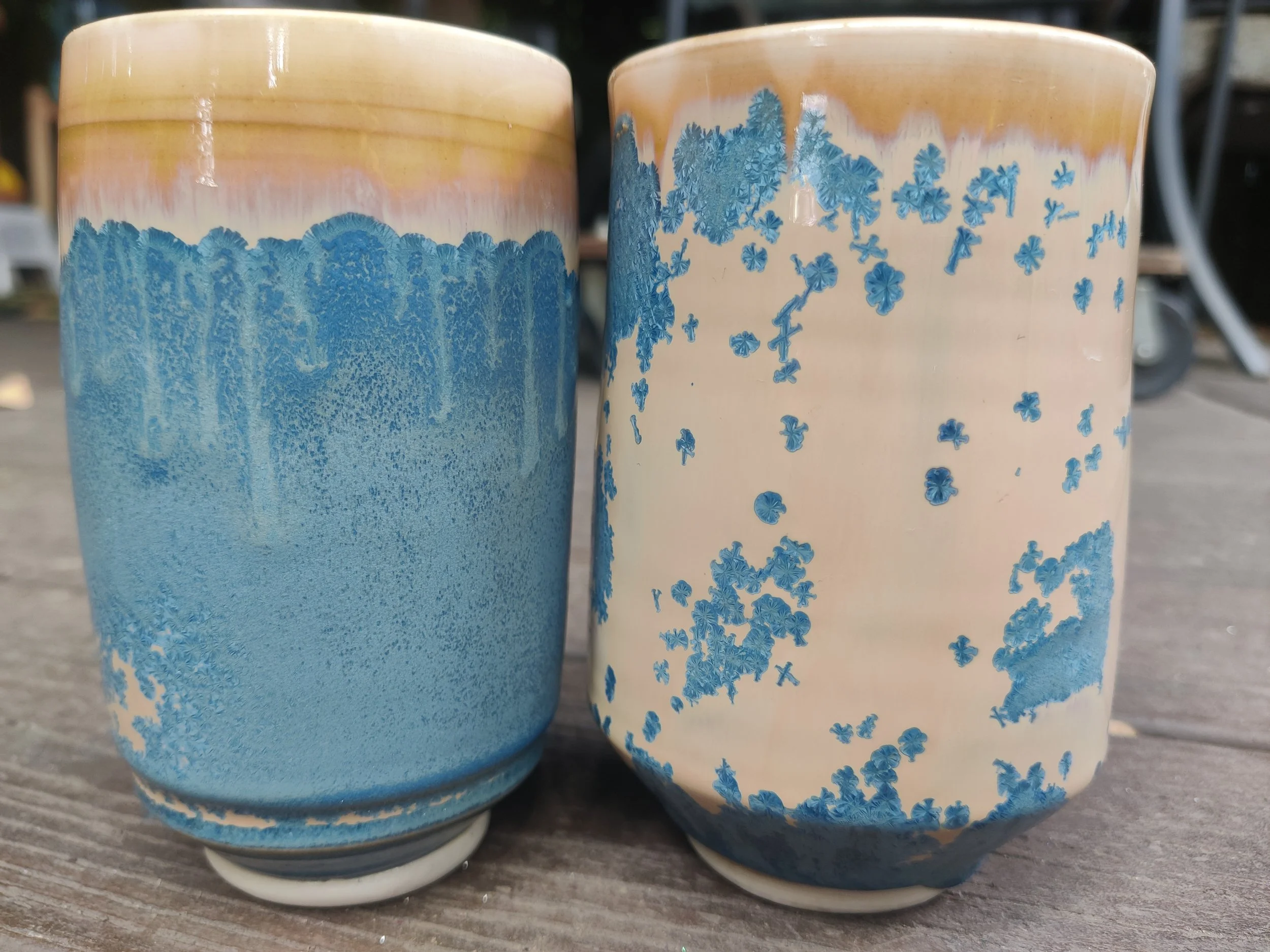
Dontes crystal base 2% nickel oxide
Same specific gravity, same clay, same kiln load; The only difference is how long I dipped each one. Can you guess which one was dipped for a shorter time?
That’s right, the one on the left.
You: “The matt glaze?”
me: yes, that’s what most people say but let’s unpack that.
I believe, as is taught by CMW, that many matt glazes are just over nucleated crystal glazes. Two things I know about crystal glazes though my tests; Too much heat will kill crystals (as in make them less numerous) allowing them to spread out and grow. Keep in mind a thicker application of glaze also mimics a hotter firing. The combination of these two effects is what's happening here. The cup on the right was dipped for 4 seconds while the one on the left was dipped for 2 seconds. I in fact got lucky in that the one on the left because there is a spot where you can clearly see it’s a crystal glaze and not a matt glaze.
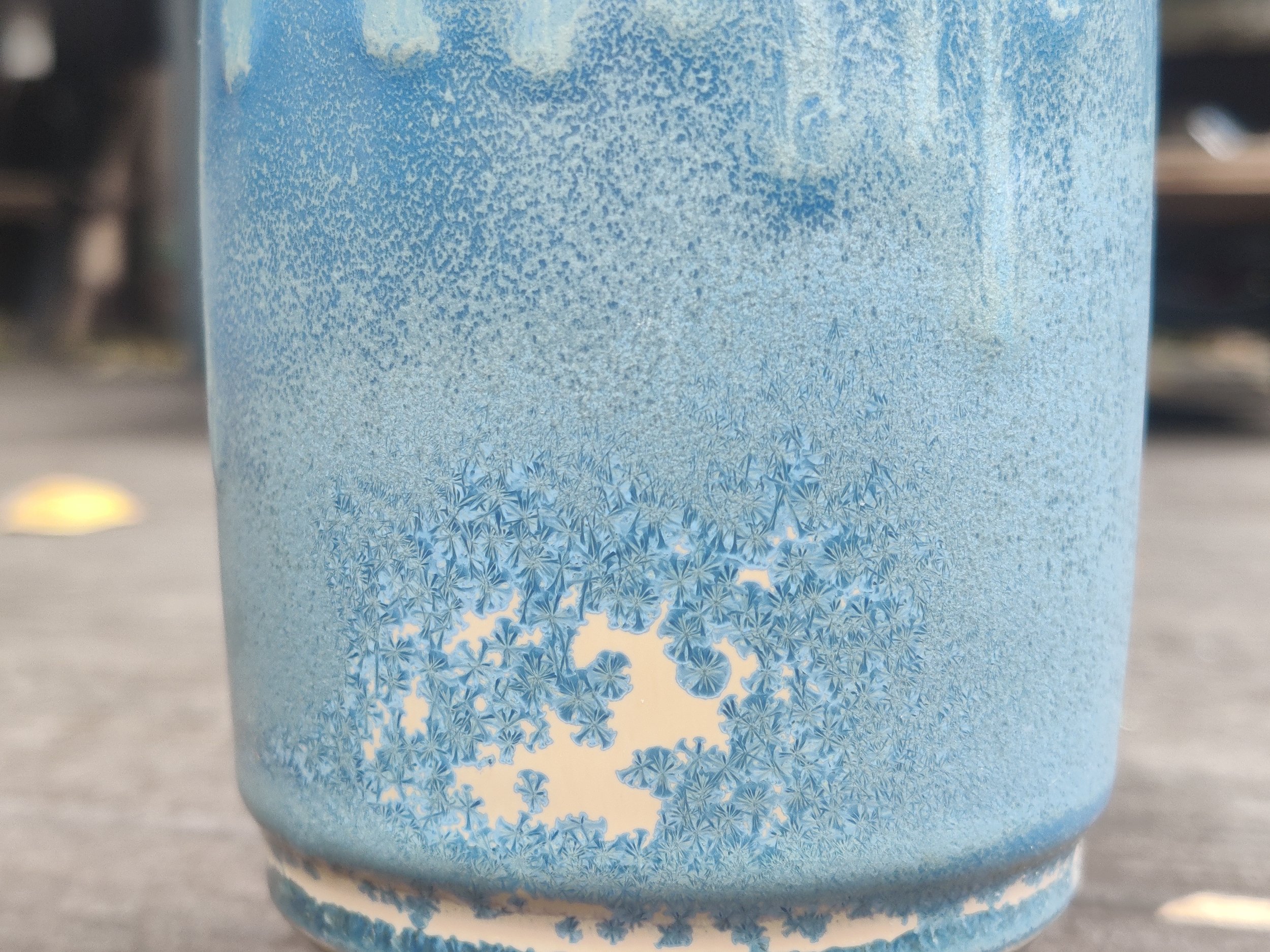
Here you can clearly see this is not matt glaze. Just a poorly fired/applied crystal glaze with so many crystals in one place the crystals can’t grow . Too many crystals in one place bump in to each other making it hard for them to spread out.
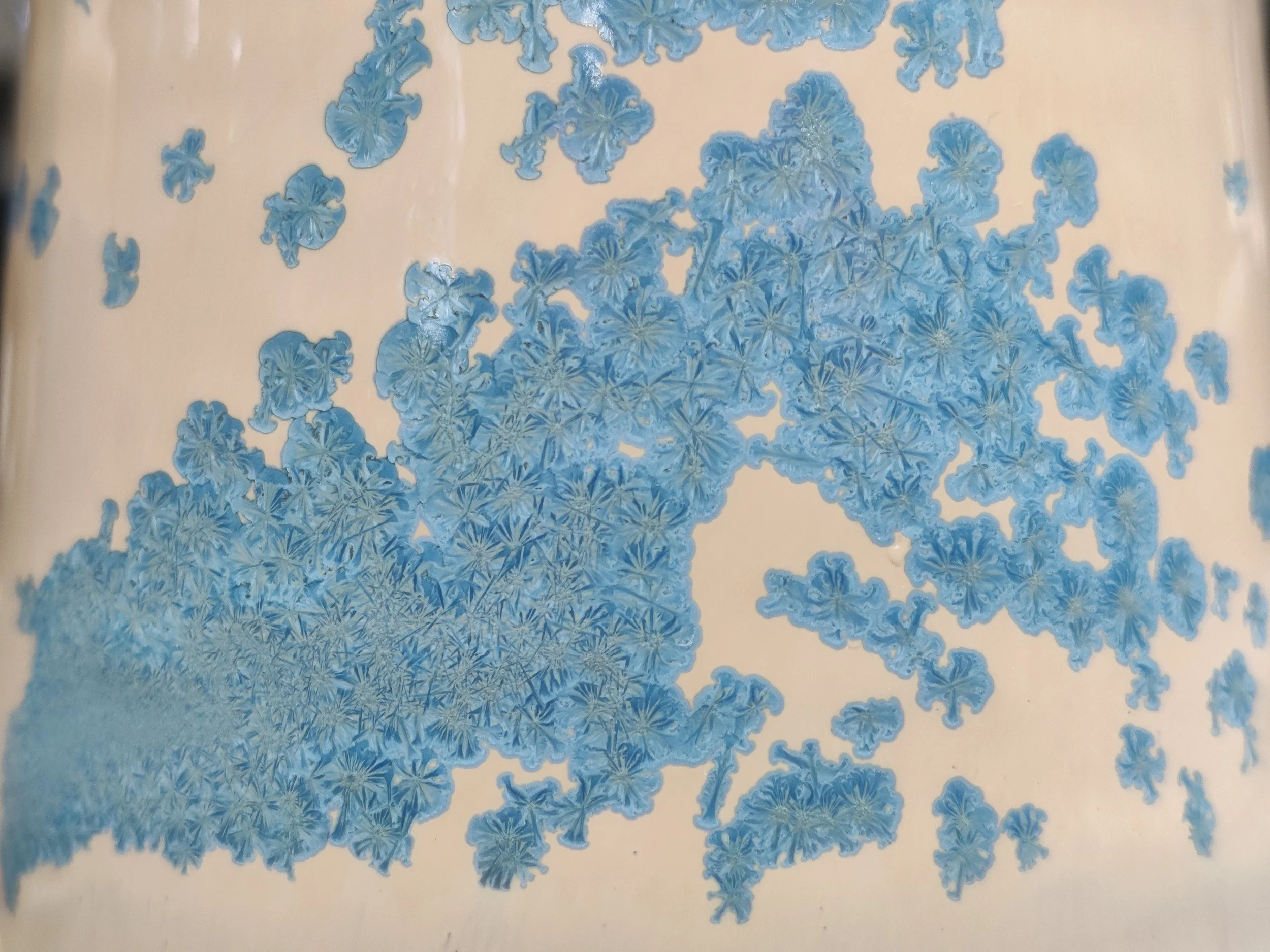
Vs the correctly applied 4 second dipped cup. Plenty of room to see an grow the crystals.
A large issue I have with matt glazes is that very few of them are truly matt. Many people are using crystal glazes that believe a cooler firing turns it into a matt glaze when you probably have a crystal glaze you aren't applying correctly . As a side note, titanium dioxide seems to also hinder crystal nucleation. This is also why people seems to think taking out TIDI makes crystal glazes matt or TIDi in general helps “seed crystals”. In truth over nucleation of crystals prevent crystals from growing as they bump in to each other and by adding titanium dioxide you are giving crystals space to grow by helping get rid of the over nucleation. I found this picture online that shows this very well.
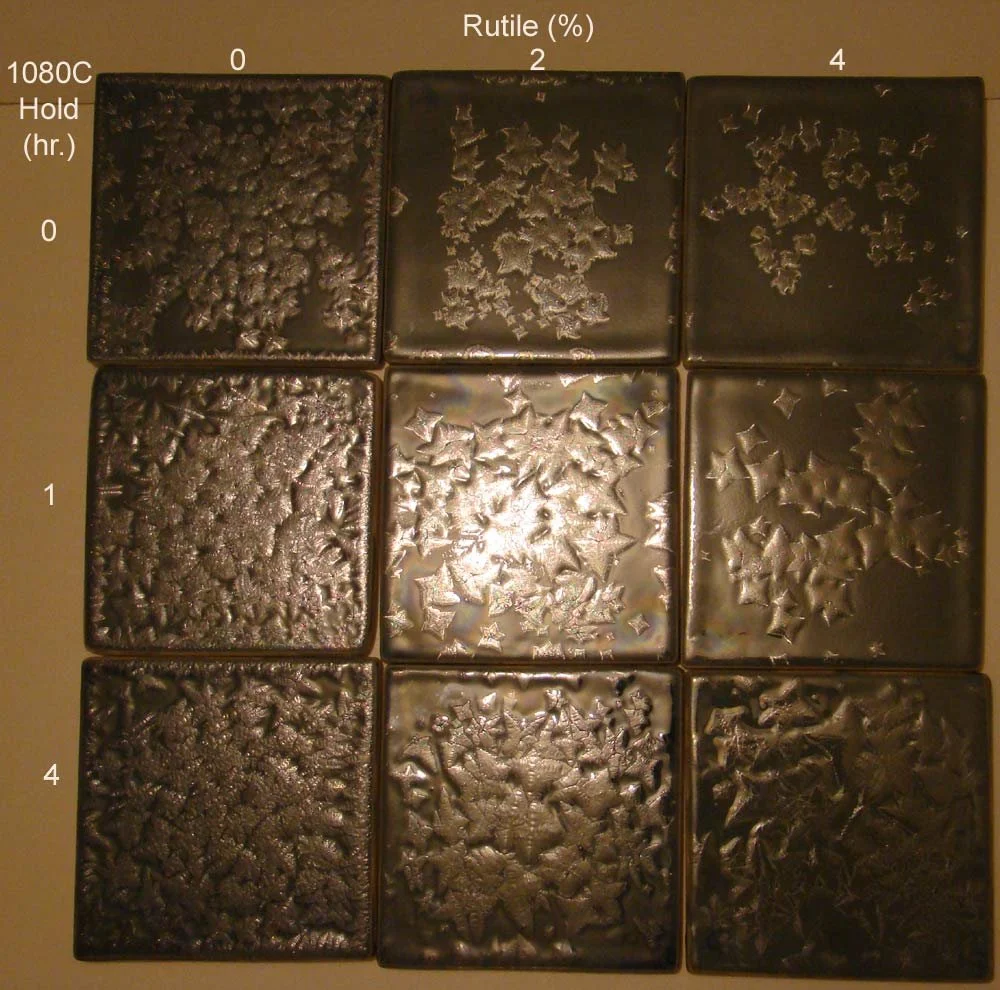
This is a great picture. Same glaze, same application, just different amounts of rutile) which in truth is Titanium dioxide with 10% or so iron) you can see as rutile is added the crystals get less present but this allows the crystals to spread out more. You can also see the tiles on the left could easily be mistaken for a matt glaze if rutile was not added or application was not tuned. I also like how you can see the crystals get bigger as the hold gets longer. I have one more example for you. Remember my Metal Garurumon glaze? The thing that makes it interesting are the yellow iron crystals in it along with phase separation. It’s like a Tenmoku gold glaze in that way (i’ll be honest, idk if these are iron or magnesium crystals or a phase of the two but I do know they are crystals and work as such) and they work in the same way a crystal glaze does because….. it has crystals!
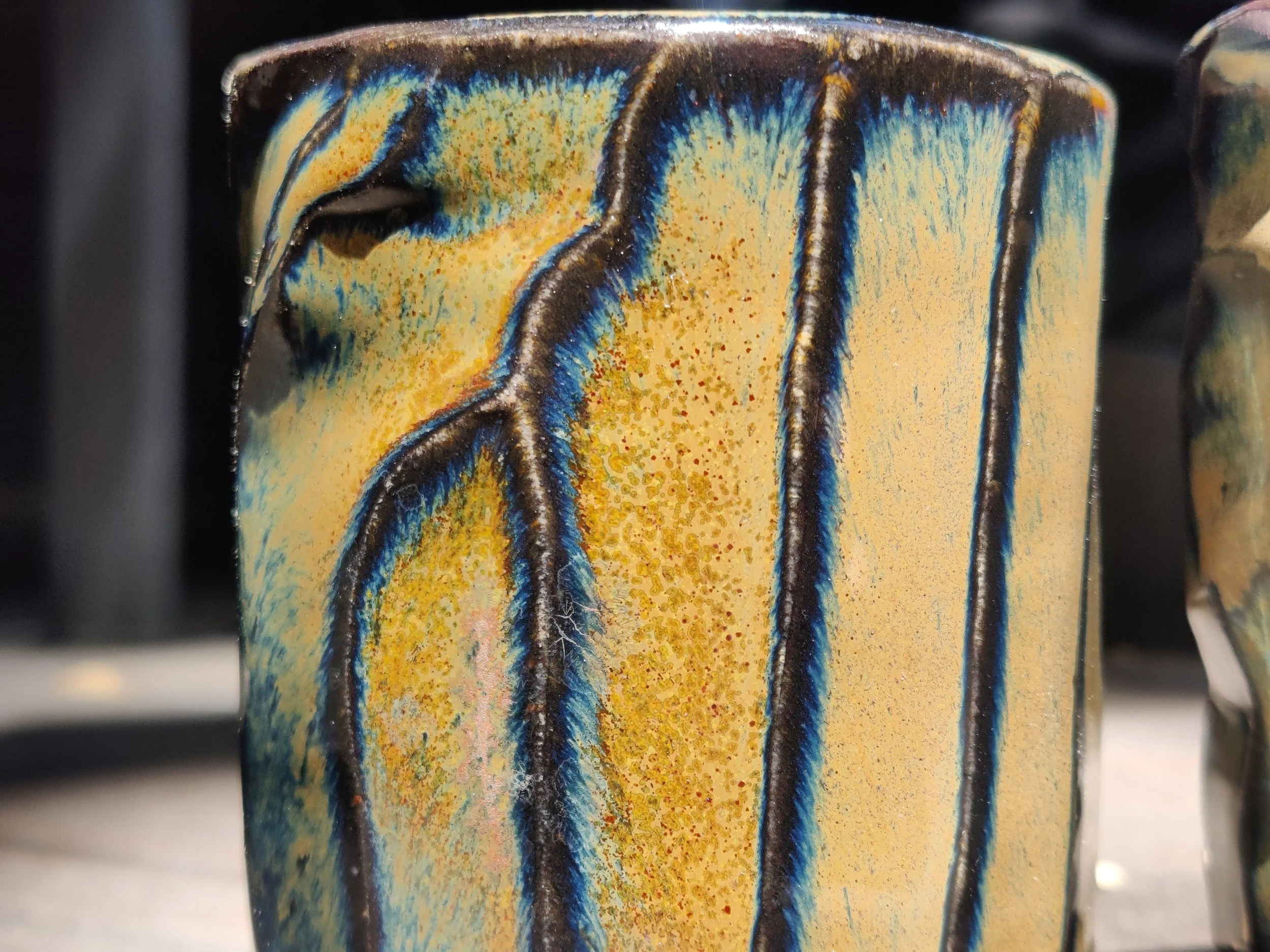
Metal Garurumon
Fired to cone 5.5 with a 2.5 second dip
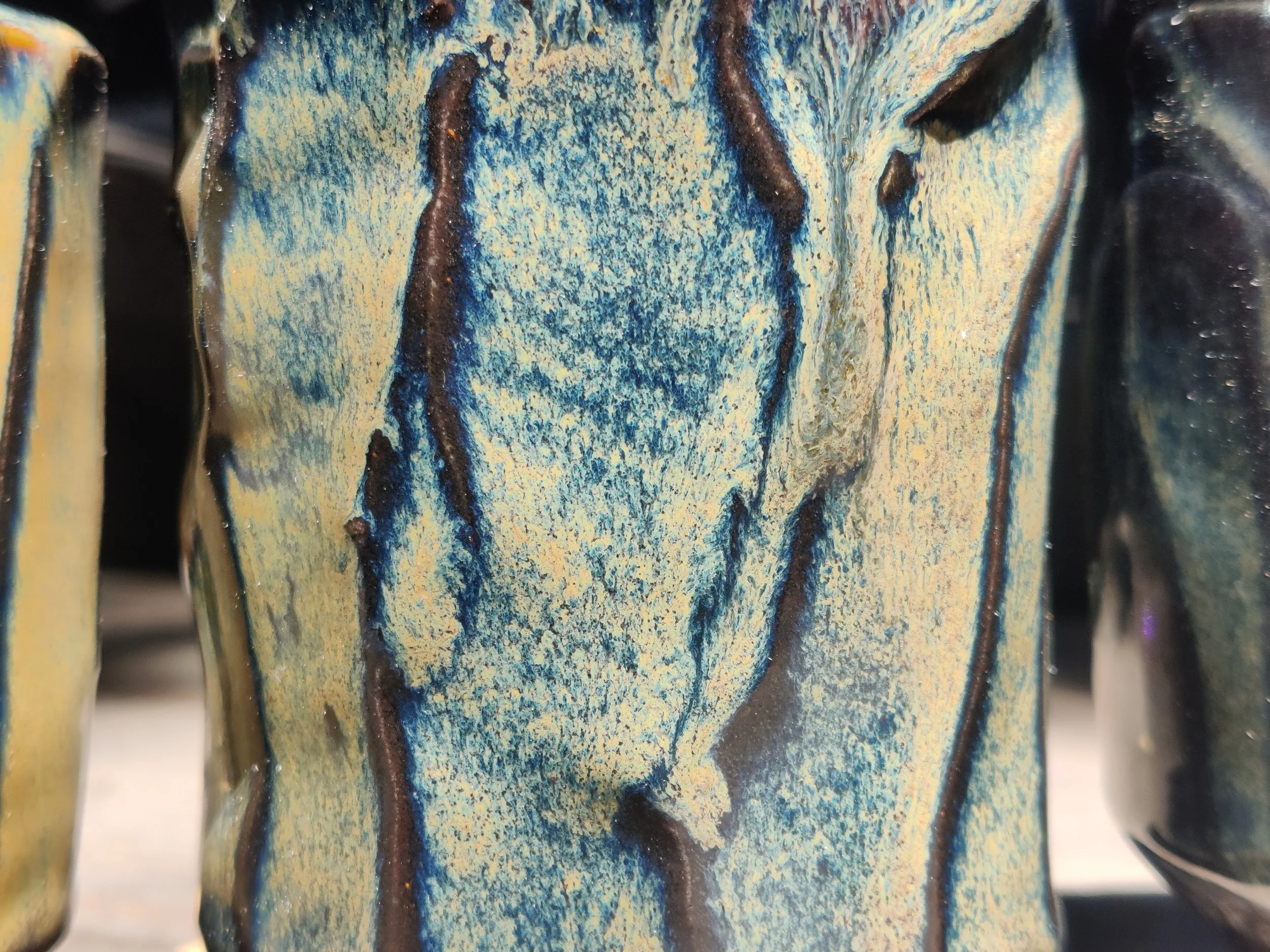
Metal Garurumon
Fired to cone 6 with a 2.5 second dip.
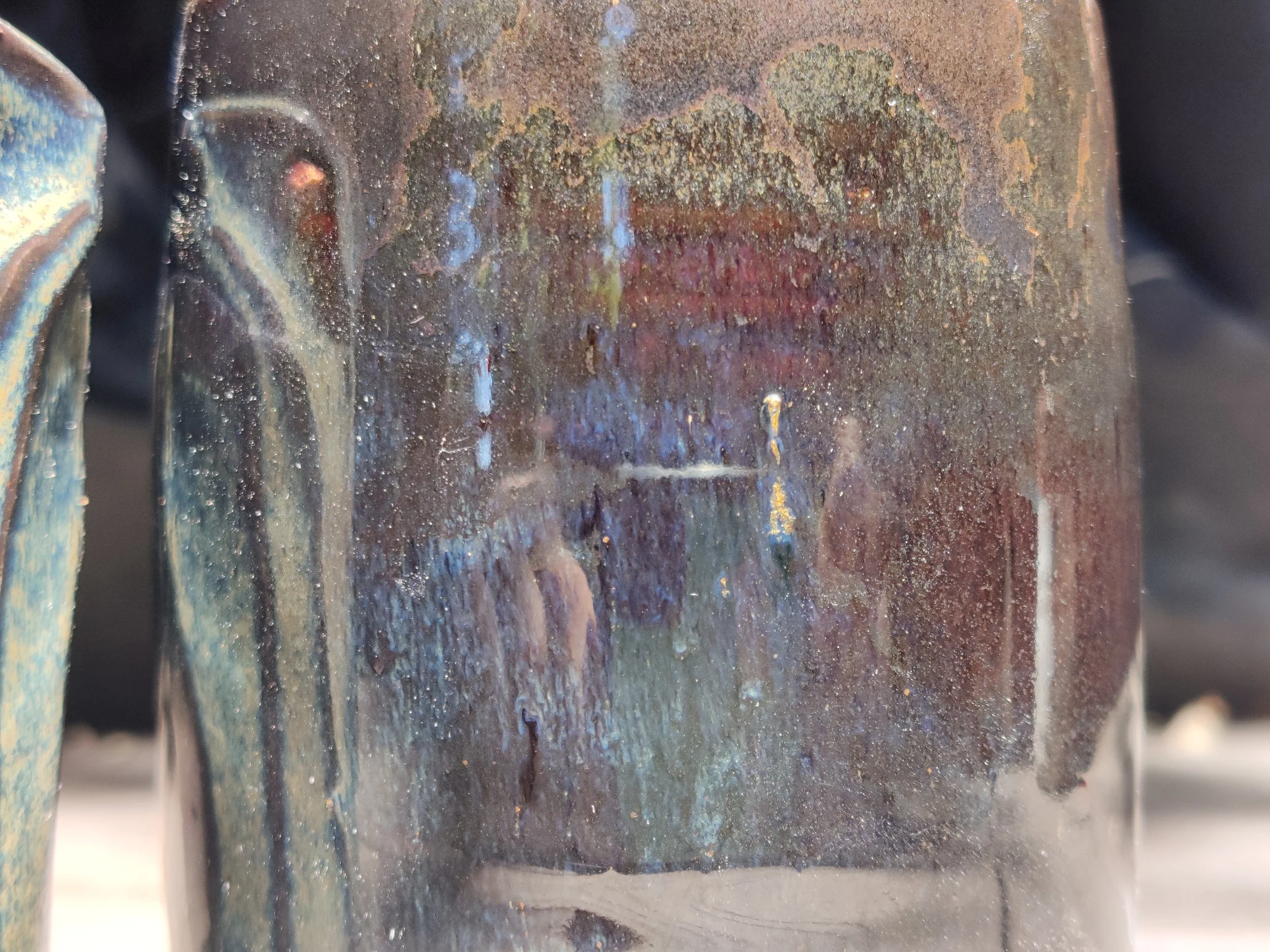
Metal Garurumon
Fired to cone 7 with a 2.5 second dip
See that. The hotter I fired the less crystals I get. This glaze is kind of sensitive but I developed it to work at cone 6 with a 2-3 second dip (with a specific amount of water)
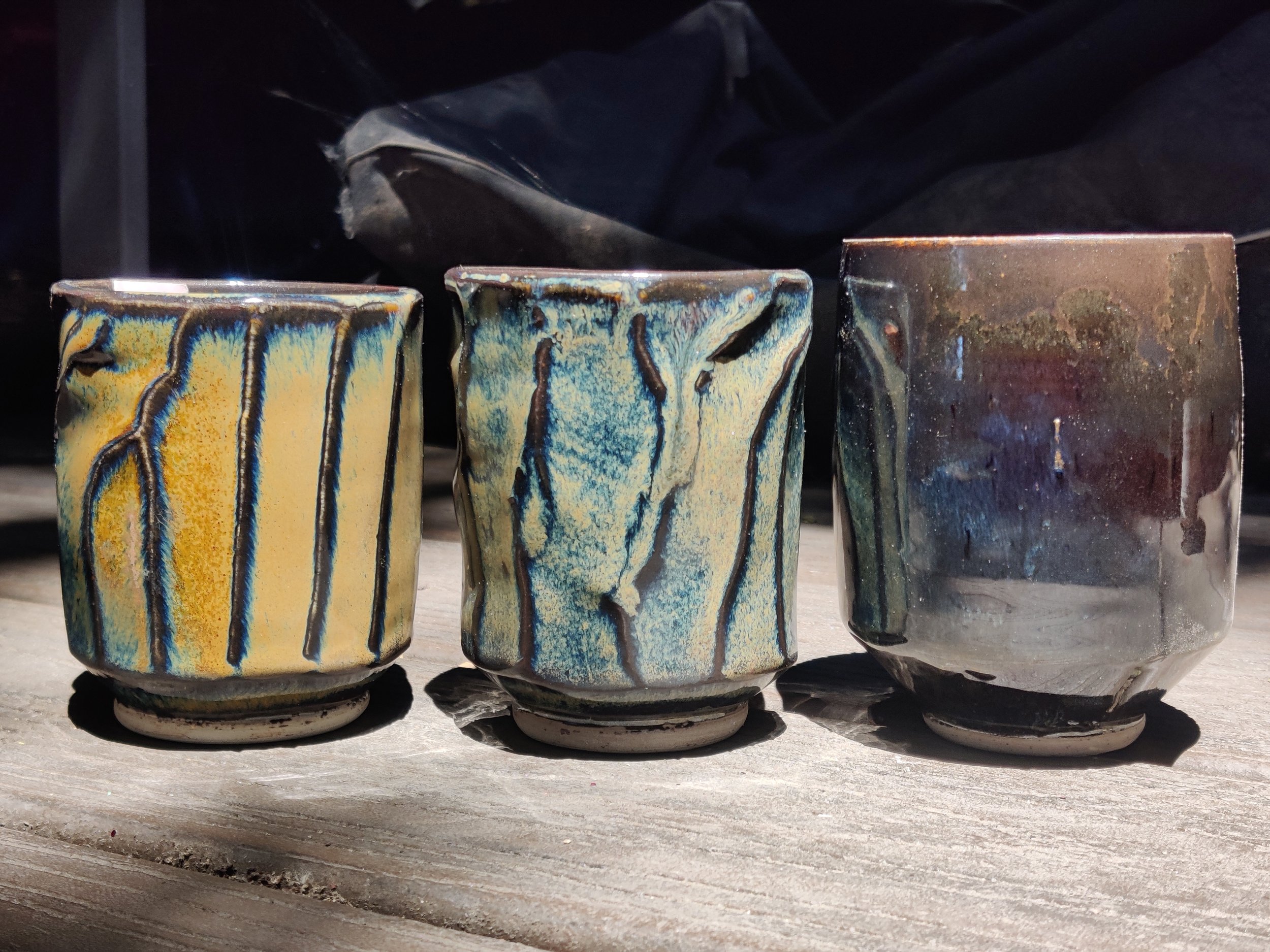
You can see the yellow crystals disappear as I fire it hotter.
In conclusion, Crystal glazes are very sensitive to application and heat. Too much heat can reduce the amount of them and the application, SG, and viscosity need to be turned. Every glaze has different variables for these things. As a last note, many many crystal recipes have Titanium, rutile, lithium carb, or high fluxes in them. These are not needed to succeed in making crystal glazes but so many books have these ingredients for base recipes that people assume they must have them to work. In truth many of these ingredients help reduce the amount of crystals which allow the crystals room to be seen and grow without cluttering; Something that could have been done with application or heat tuning. A true matt glaze will often stay matt when fired a little hotter with little to no variation unlike a crystal glaze that either was not applied correctly or fired hot enough.