The crystal glaze community is a strange one; Full of misinformation, passed down recipes that die with mineral availability. The second a frit or mineral dies off they have to adapt. Fortunately for me I never got in to making crystal glazes. I had some success with passed down recipes but never really understood what I was dealing with. So, I took a Ceramics Material workshop class. I bought the self taught course, as I usually do, and ingested all the info. It didn’t take me long before I made my own Zinc crystal base, tuned the application, and got a good result. So I sought out to make my own cone 6 oxidation crystal glaze. Here is my first try.
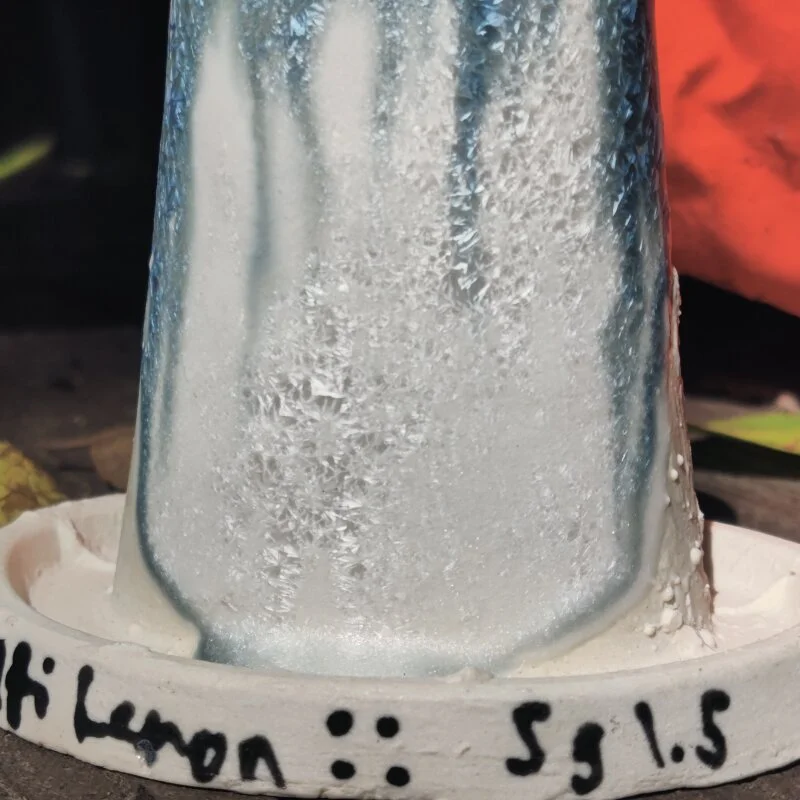
Anti lemon
SG : 1.5
application : 4 second dip
clay: bmix casting slip.
Cone: 6 ox
It’s coded “Anti lemon” because every other crystal glaze thats been given to me turns yellow, due to the mass amounts of titanium diox in it. I dislike the color yellow, so I made sure it had 0 TIDI in it.
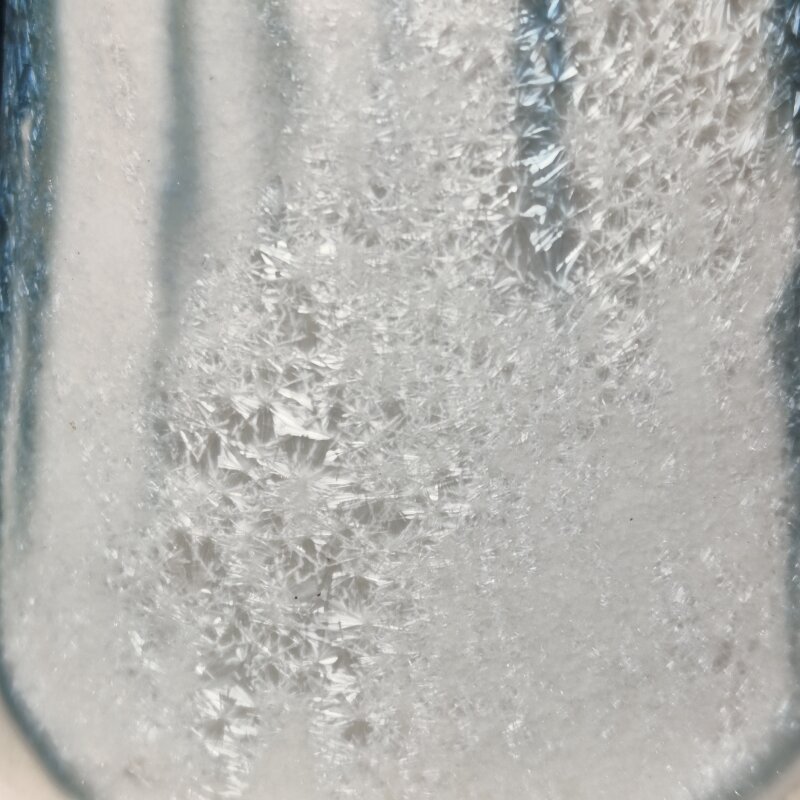
Anti lemon crystal glaze close up
You Probably notice the darker color on the other side, right? I like to use the other side of my tiles for secondary tests or application tests. I added 2% black nickle oxide to the base recipe of this glaze just to see what would happen. And.
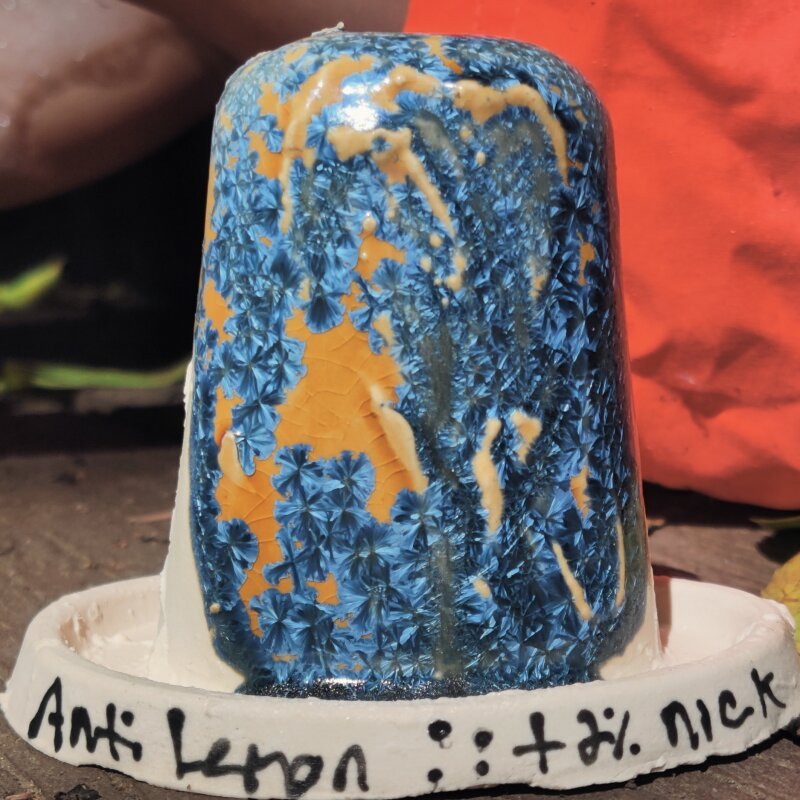
Anti Lemon +2% black nickle oxide.
Sg: 1.5
Application: 4 second dip
cone: 6 ox
clay: Bmix slipcast
This was great. The only thing wrong with it was the crazing. By this point I can fix crazing with a few tests. Knowing it’s about thermal expansion tells me I can fix it easily.
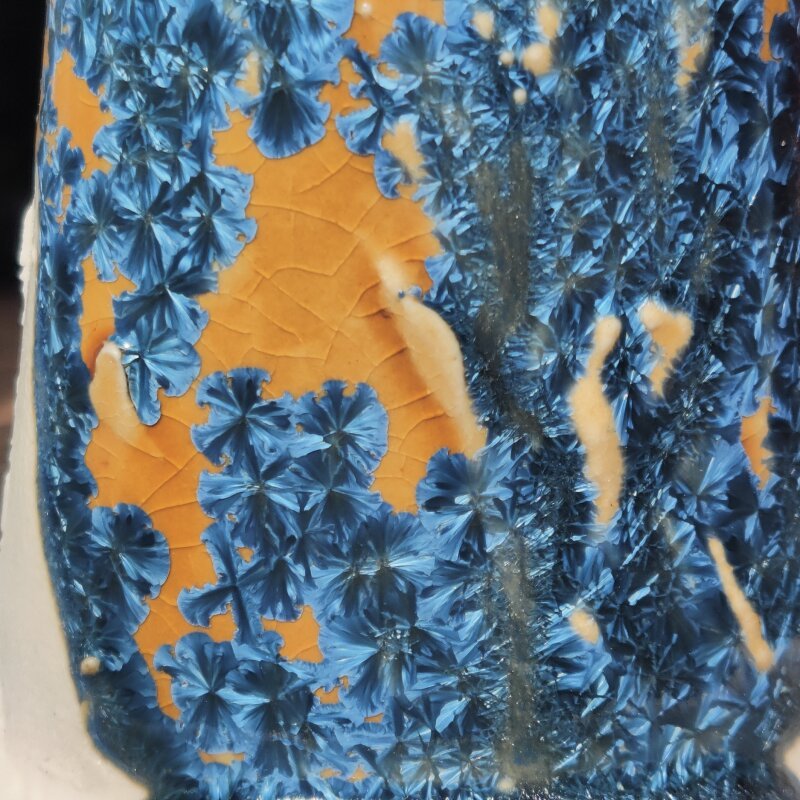
Here is a little mogg close up for you
Remember how I mentioned the amount of misinformation out in the crystal glaze world? One of the big beliefs is that you need rutile of titanium dioxide to “seed” the crystals. This glaze you see here has no titanium dioxide in it what so ever. Another is that you need lithium carbonate as a primary flux to get a good crystal glaze. This recipe has no lithium carbonate what so ever. Finally there is a belief that all crystal glazes craze. As you will soon see, we can control that very easily. Finally there is a belief that all crystal glazes run. This is a little true but you can absolutely get crystals with little to no running; Big crystals? probably not, but crystals none the less.
Before I go on I’d like to take a side bar to mention that testing will almost always point to a truth if done correctly. I think part of the reason people think you need titanium is that if you under fire a crystal glaze it will over nucliate the crystals making it look like a matt glaze. In truth the crystals are just bunched up and not given the space to grow. The addition of titanium dioxide “kills” crystals off. This gives the crystals that do survive the much needed space to not only grow but not look like a matt glaze. I think most of the time this is the trick the old school potters are doing while making a miscorrelation. “ Oh, I can see the crystals more clearly and bigger now that I added the titanium dioxide”. This in in fact how I developed by tenmoku gold glaze. There were too much yellow magnesium crystals. I added 2% tidi to it and, boom; perfectly spaced crystals without over nucleation. Two thing I know for sure tidi does. One, it promotes phase separation. Two, it kills off crystals in crystal glazes.
I wanted to get rid of the crazing and spread out the crystals without the use of tidi. Fortunately CMW has taught me the second thing that kills crystals; Heat. You can “burn out” if they are fired too hot. Most crystals grow in lower heat but if fired above the temp that the glaze can handle you will get less crystals. We cant less crystals and no crazing. So what do we do? I fixed the crazing by adding silica and lowered the alumina a tiny bit. It worked out great on the second test, Just as I was taught.
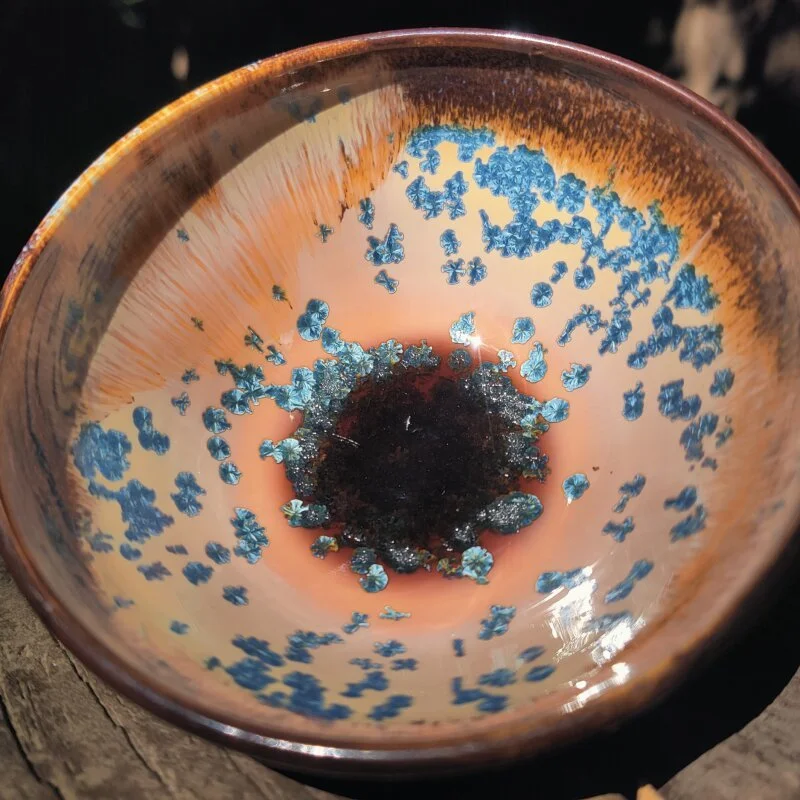
Anti Lemon test #2
SG: 1.5
application: rolled in for about 4 seconds
cone: 6 ox
Clay: bmix
Easy claps, gents. No crazing, no tidi, no lithium carb, nerf or nothin’
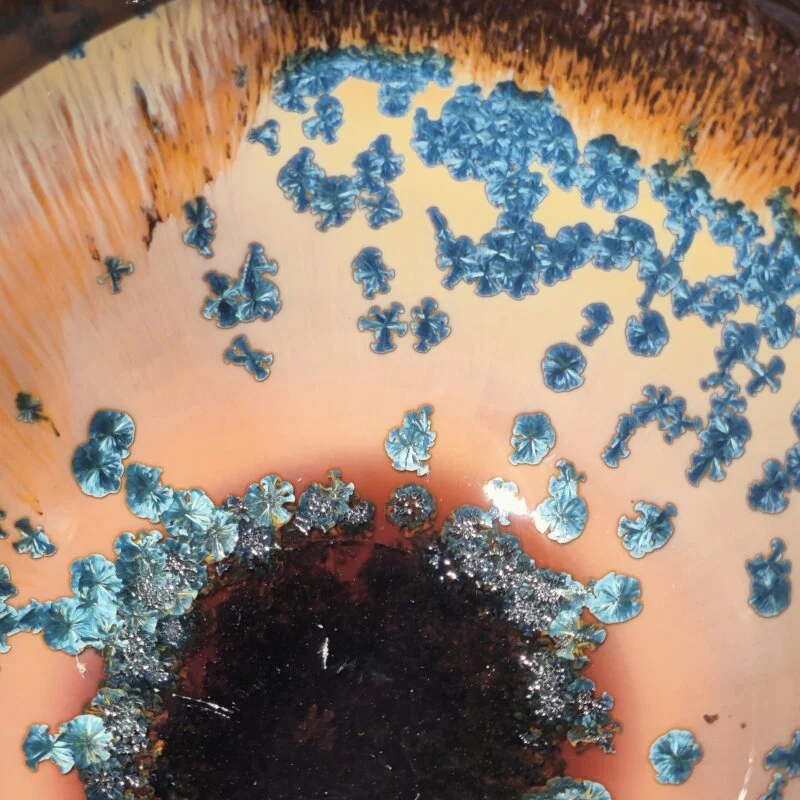
This was only with a 20min hold at 1800f.
The even cooler part of this is that we can use this glaze as a base to a bunch of other things that make color. Cobalt, copper, ect. What I really enjoy about this glaze is the pinkish color. Because I did not use tidi the color never turned this weird yellow tinge that tidi usually will if under fired. Now I have this amazing “zinc pink” . I know that zinc can make pink. Under what circumstances? I don’t know. My lumos will do it at times. I think it has something to do with firing hotter but I can’t say for sure. Keep in mind you are only seeing the two primary tests I have run. By this point I have this glaze on real cups and it’s working as intended :).